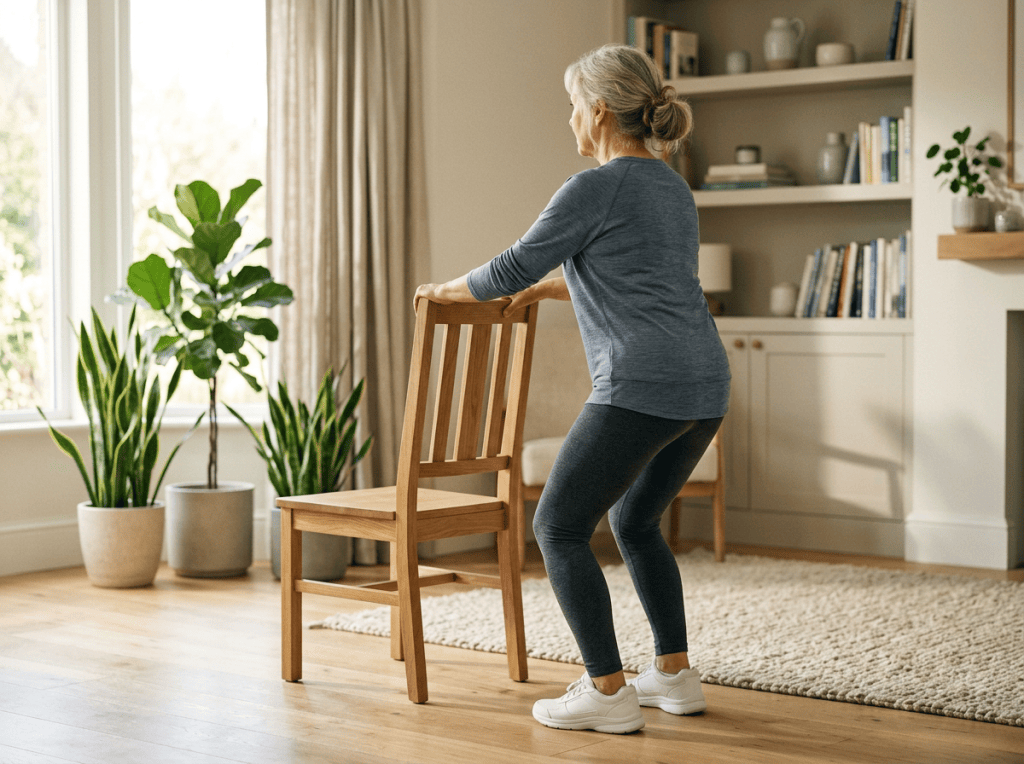


Did you know that extra weight around your middle can harm your health? Harvard University research shows it affects your looks and raises risks for heart disease and diabetes. It’s key to know the difference between subcutaneous and visceral fat.
Subcutaneous fat is what you can pinch. Visceral fat wraps around organs and is more dangerous. For adults over 60, losing this weight can seem daunting. But safe standing exercises can help build core strength and boost fitness.
This article will show you four easy exercises for seniors. These exercises target your core, help you lose fat, and improve your fitness. Get ready to take back your health and confidence!
Key Takeaways
- Excess weight around the middle can lead to serious health issues.
- There are two types of belly fat: subcutaneous and visceral.
- Safe exercises can help you build core strength.
- Improving fitness is achievable at any age.
- Four specific movements will be discussed in this article.
Why belly overhang develops after 60
After 60, belly overhang can happen for several reasons. As you get older, your body changes in ways that can cause fat to build up around your belly. This is because of natural aging processes.
One big reason is the loss of muscle mass. When you lose muscle, your body burns fewer calories even when you’re not moving. This means you can gain belly fat if you eat more calories than you burn.
Hormonal changes also play a big part. After 60, your hormone levels, such as estrogen and testosterone, change. These changes can cause fat to accumulate in your belly area, affecting how your body looks and feels.
It’s important to know about the different types of belly fat:
- Subcutaneous fat: This is the fat you can pinch. It’s under your skin and is less harmful.
- Visceral fat: This fat is around your organs and is very dangerous. It can lead to heart disease and diabetes.
Studies show that belly overhang is driven by total body fat. You can’t just work out the muscles under your belly to lose fat. Knowing this is key when tackling belly fat after 60.
The spot-reduction myth and what really works
Many people believe that doing ab exercises will directly reduce belly fat. But this is a common fitness myth. The truth is, your body uses fat from all over when you exercise, not just the area you’re focusing on. So, endless crunches won’t significantly reduce the fat on your belly.
To lose fat around your middle, you need to focus on losing fat overall. The secret is to create a calorie deficit. This means burning more calories than you eat. By being more active and choosing healthier foods, you can do this. Over time, your body will use its fat stores, including the stubborn triglycerides around your belly.
What really helps you lose weight in a healthy way is burning more calories throughout the day while building lean muscle mass throughout your entire body. Strength training is very effective because it increases the calories your body burns, even when you’re resting. This is why adding exercises that build lean muscle is key for losing fat.
In summary, forget about spot reduction. Instead, go for a holistic approach that includes regular exercise and a balanced diet. This way, you’ll see total body fat loss and become a healthier version of yourself.

Why standing exercises are a smart choice for older adults
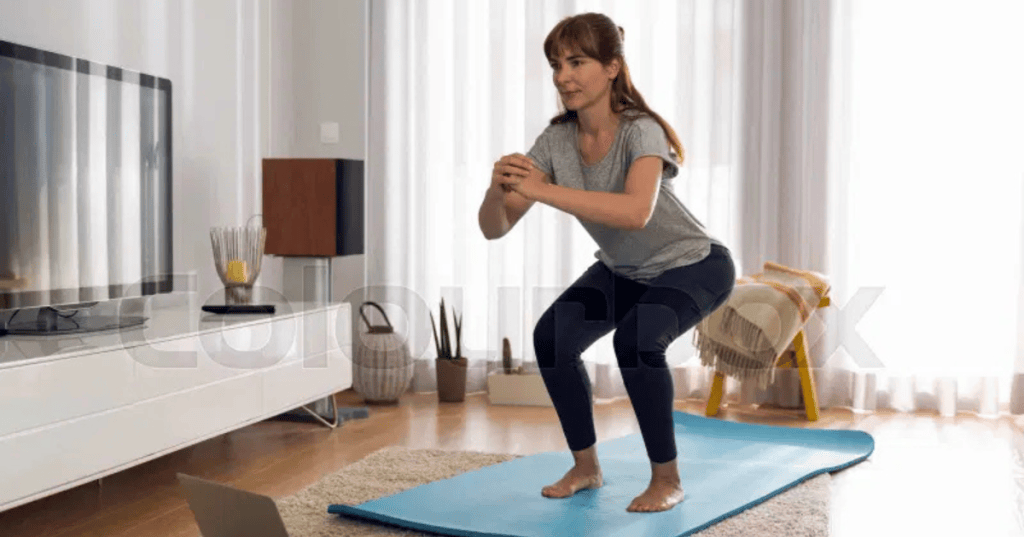
Standing exercises are a great option for older adults wanting to get fit. They are accessible and joint-friendly, perfect for those with mobility issues or chronic pain. Unlike floor exercises, standing exercises help build core strength and burn calories without the discomfort of the floor.
Standing exercises also mimic functional movements from daily life. Activities like getting up from a chair or climbing stairs use similar motions. This makes them not only effective but also practical in improving your quality of life.

Standing exercises are also key for improving balance and coordination. As you get older, staying stable is vital to avoid falls. A study found that balance training can significantly reduce fall risk in older adults. This shows how important these exercises are for your routine.
Standing exercises also mix strength training and aerobic activity. This combo builds lean muscle and boosts your heart rate, helping burn calories. In short, standing exercises are a wise choice for older adults looking to stay fit without risking injury.
In summary, the benefits of standing exercises include:
- Accessibility for those with joint issues
- Improved balance and coordination
- Functional movement mimicry for daily activities
- Combination of strength training and aerobic benefits
Adding standing exercises to your fitness plan can help you reach your health goals safely and effectively.
4 standing exercises to help address belly overhang after 60
Staying active is key as we age to manage belly overhang. Standing exercises are great for strengthening your core and boosting fitness. Here are four standing exercises to help tackle belly overhang and improve strength and balance.
1. Sit-to-Stand Squats
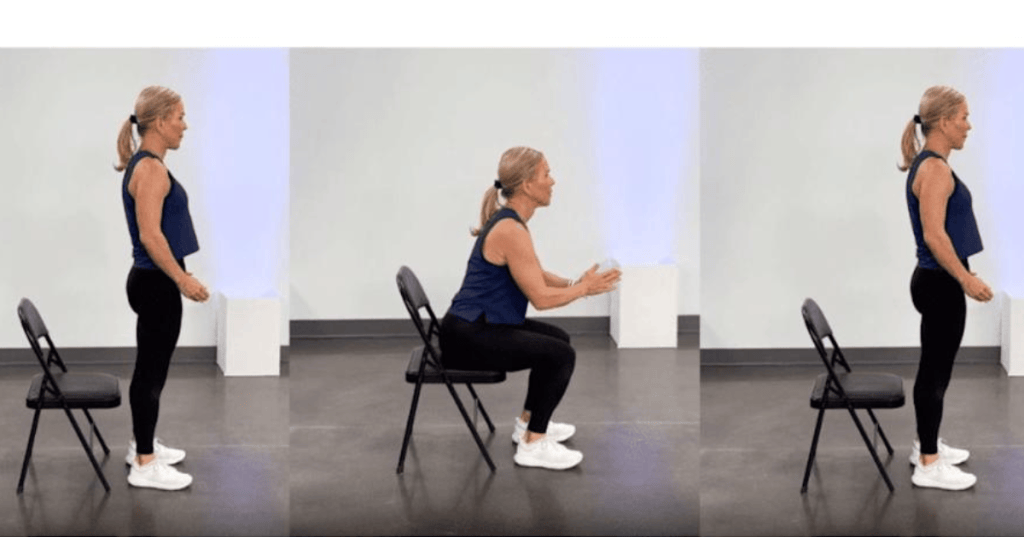
How to Perform Sit-to-Stand Squats
To do sit-to-stand squats:
- Sit on the edge of a sturdy chair with your feet hip-width apart.
- Lean slightly forward at your hips and engage your core.
- Stand up by driving through your heels.
- Lower yourself back to the chair with control.
Do two to three sets of 8 to 12 reps, resting for 60 to 90 seconds between sets.
Why Sit-to-Stand Squats Help Address Belly Overhang
Sit-to-stand squats are vital in daily life, such as getting up from a chair. They target your largest lower-body muscles and engage your core. This burns more calories than just doing ab exercises.
2. Step-Ups
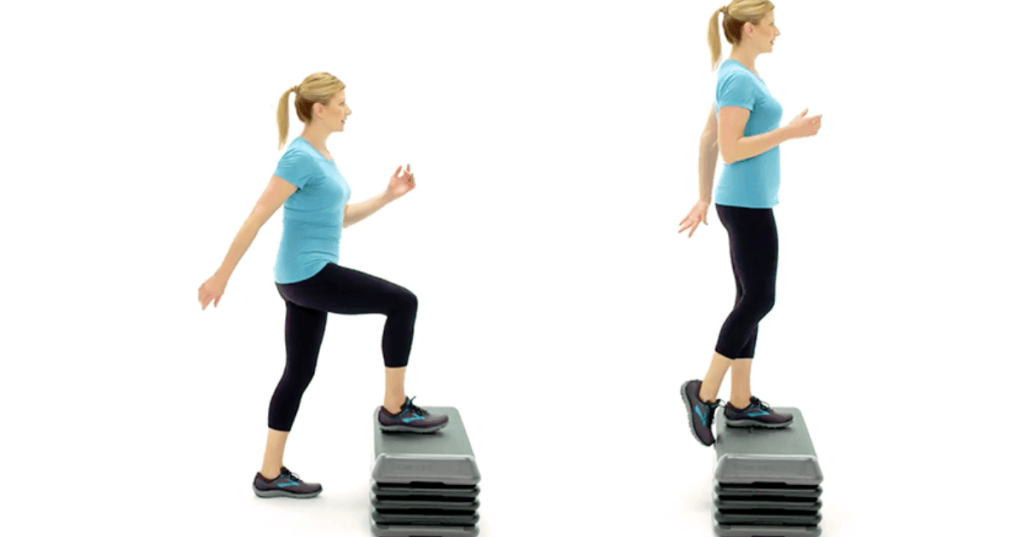
How to Perform Step-Ups
To do step-ups:
- Stand in front of a sturdy step.
- Place one foot firmly onto the step.
- Press through your heel to lift your body up.
- Bring the opposite foot onto the step.
- Lower yourself back down with control.
Do all reps on one side before switching legs. Aim for two to three sets of 8 to 12 reps per leg, resting for 45 to 60 seconds between sets.
Why Step-Ups Help Address Belly Overhang
Step-ups strengthen your glutes, quads, and calves while raising your heart rate. They offer a strength and cardio boost in one move. Plus, they’re easier on your joints than squats or leg lifts.
3. Standing Knee Raises
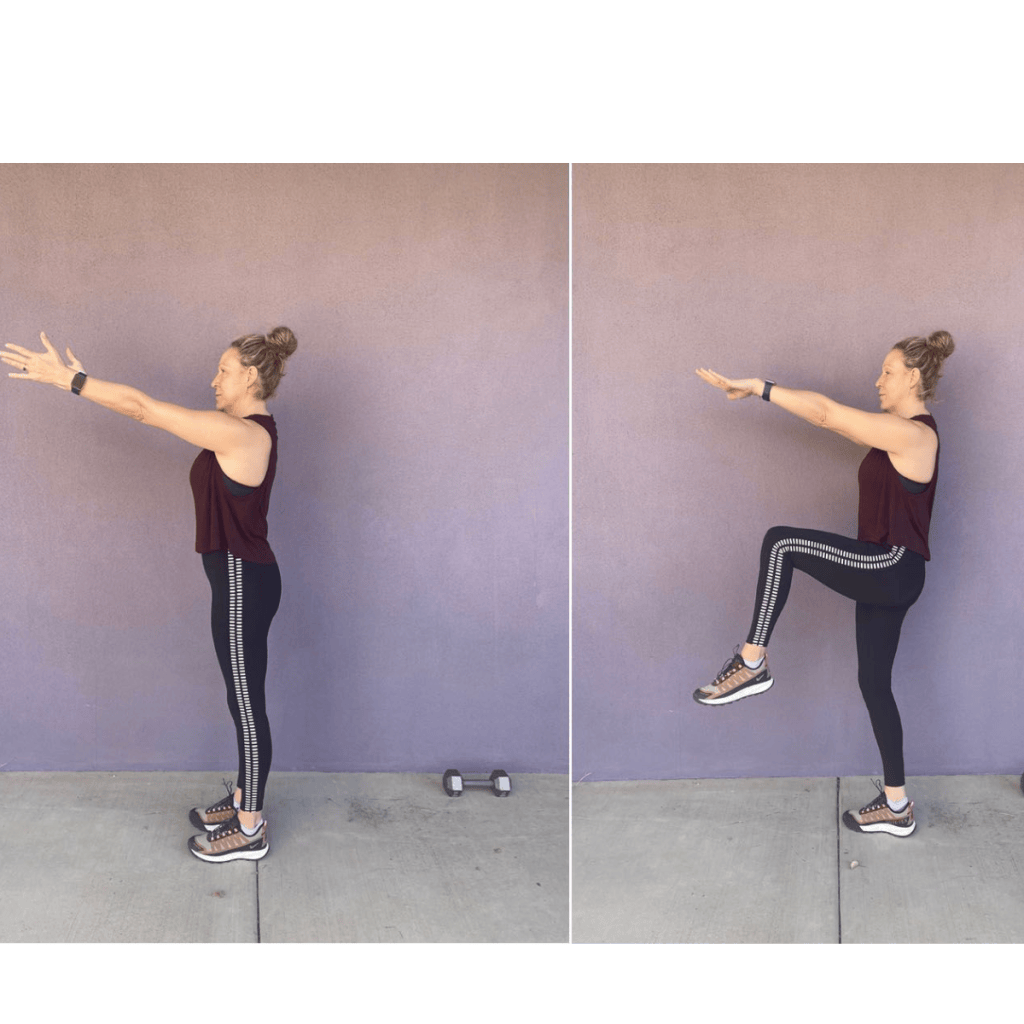
How to Perform Standing Knee Raises
For standing knee raises:
- Stand tall with your feet hip-width apart.
- Hold onto a chair or wall for support if needed.
- Flex your abdominal muscles.
- Slowly lift one knee toward your chest without leaning backward.
- Lower it back down with control and repeat on the other side.
Do two to three sets of 10 to 15 reps per side, resting for 45 to 60 seconds between sets.
Why Standing Knee Raises Help Address Belly Overhang
Standing knee raises strengthen your deep abdominal muscles without needing to lie down. They also boost balance, coordination, and hip mobility. This helps you build stability and core strength.
4. Standing Wood Chops
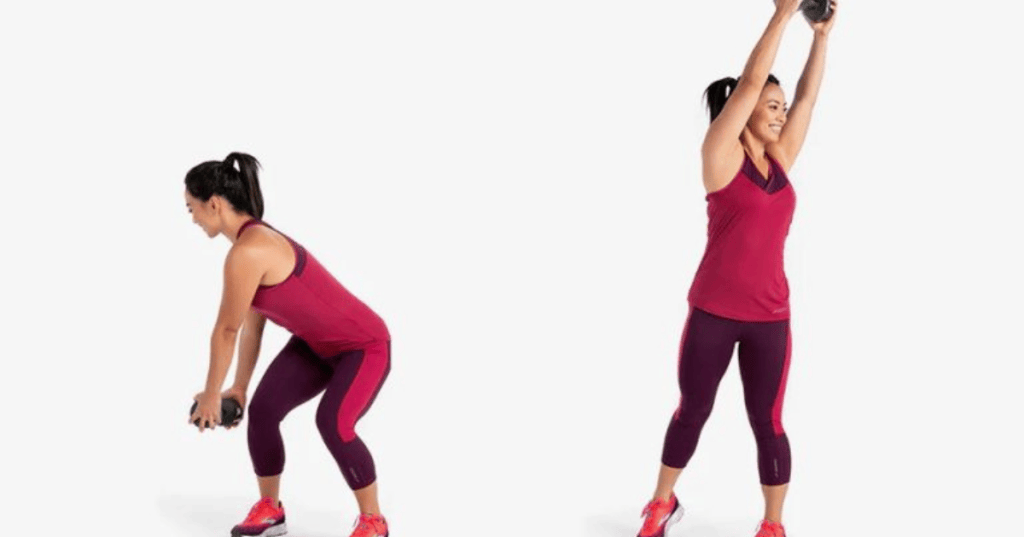
How to Perform Standing Wood Chops
To do standing wood chops:
- Hold a light dumbbell or medicine ball with both hands.
- Start with your hands beside one hip.
- Rotate your torso to lift the weight diagonally across your body.
- Finish with your hands above the opposite shoulder.
- Return slowly to the starting position and repeat on the same side before switching sides.
Aim for two to three sets of 10 to 12 reps per side.
Why Standing Wood Chops Help Address Belly Overhang
The standing wood chop engages your entire core, not just your abs. Its diagonal, rotational pattern builds twisting strength and stability. These skills decline with age.
Do these exercises for 30 seconds each, with rest in between. For a longer workout, repeat them 2 or 3 times. Always check with your doctor before starting any new exercise routine if you have health concerns.
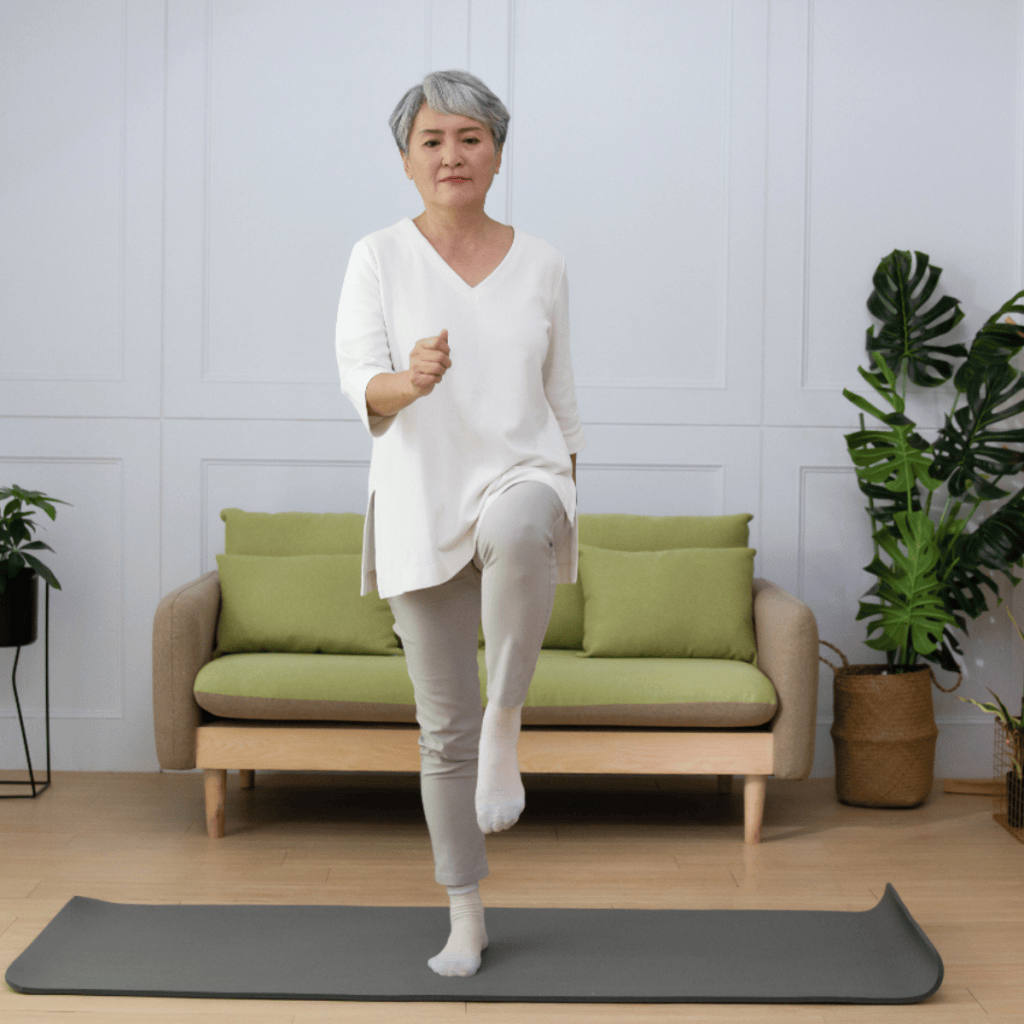
How to structure your weekly routine
To tackle belly overhang, seniors should plan a weekly exercise schedule. The UK Government recommends at least 150 minutes of moderate-intensity aerobic exercise per week. You don’t need to exhaust yourself. Activities that leave you slightly out of breath but that you can talk through are effective.
Begin with the four standing exercises in your routine. Do these exercises two to three times a week, on different days. This lets your muscles recover and get stronger. Being consistent is important for better results.
As you get better, think about progressive overload. This means slowly increasing the sets, reps, or weight. It helps build strength and endurance, making your workouts more effective.
Remember, rest and recovery are key, too. Adults over 60 need time to repair. Include rest days in your routine to avoid injury and fatigue.
Safety tips and modifications for joint comfort
Starting a new exercise routine is exciting, but safety should always come first for those over 60. If you have a chronic condition, like osteoporosis or arthritis, talk to your doctor first. They can give advice to make sure your workouts are safe and right for you.
When doing standing exercises, keep these joint-friendly modifications in mind:
- For standing knee raises, hold onto a sturdy chair or wall for balance support. This helps you stay stable as you lift your knees.
- When doing step-ups, use a lower step to reduce strain on your joints. Start with a height that feels comfortable and gradually increase as you get stronger.
- During standing wood chops, limit your range of motion if you experience discomfort. Focus on controlled movements to avoid unnecessary strain.
Also, always warm up before exercising and cool down afterward. This helps prepare your muscles and joints for activity and aids in recovery. Listen to your body—if you feel pain, it’s important to stop and reassess your movements. Pain is not a sign of a good workout; it often means you need to modify the exercise or take a break.
By following these safety tips for seniors, you can enjoy your fitness journey while minimizing the risk of injury. Always prioritize your comfort and well-being as you engage in physical activity.
Pairing these exercises with calorie-burning daily habits
Reducing belly overhang can be easier with calorie-burning daily habits. The four standing exercises are key, but they’re even better when paired with more activities throughout the day.
Understanding non-exercise activity thermogenesis, or NEAT, is important. It’s about the calories burned from daily actions like walking or playing with grandkids. These small actions add up and help a lot.
To lose fat, you need to move more and eat right. Try gentle workout videos or gardening for extra calorie burn. Look for activities that make you breathe a bit harder but still let you talk.
Don’t worry about strict diets. Just make healthy changes. Add more veggies, choose lean proteins, and cut down on sugary drinks. These changes can make a big difference without feeling like you’re missing out.
In short, mix structured exercise with daily activity and smart eating. This combo is the best way to reduce belly fat after 60. By adding calorie-burning habits to your life, you’re on the right path to fitness.
What results to expect and how to track progress
It’s key to know how your hard work is paying off. Starting with standing exercises, it’s smart to have realistic expectations. Losing belly fat takes time, often weeks or months of steady effort. You might not see quick changes on the scale, and that’s okay.
Don’t just look at the scale. Use other ways to track your progress. For instance, measuring your waist can show fat loss the scale might miss. Taking progress photos is another way to see your changes over time.
Also, celebrate your non-scale victories. These can be doing more reps, feeling less tired going up stairs, or noticing your clothes fit better. These signs show you’re getting better, even if the scale doesn’t show it.
Building lean muscle is another big win. Muscle burns calories even when you’re not moving, helping your body stay healthy. So, even if the scale doesn’t change much, you’re making big strides in your fitness.
Keep a simple log of your workouts. Write down your reps and how you feel. This will show your strength gains and keep you motivated to keep going.
Common mistakes to avoid when starting out
Many adults over 60 face common pitfalls when they start exercising. It’s key to know these mistakes to make your routine safe and effective. Here are some important areas to focus on:
- Overtraining: Pushing yourself too hard too soon is a big mistake. It can cause injuries and burnout. Start slow and gradually increase your intensity.
- Poor form: Performing exercises with incorrect technique can be harmful. Focus on controlled movements, not speed. Quality is more important than quantity.
- Unrealistic expectations: Setting goals that are too high can lead to disappointment. Remember, progress takes time, and every small step is important.
- Skipping warm-up: Not warming up can cause stiffness and injury. Always take a few minutes to prepare your muscles and joints before exercising.
Also, holding your breath during exercises can increase tension and reduce your performance. Remember to breathe steadily. Staying hydrated is also key; dehydration can hurt your workout effectiveness.
Lastly, avoid comparing your progress to others. Everyone’s journey is unique, and focusing on your own improvements is vital for motivation. As the saying goes,
“The journey of a thousand miles begins with one step.”
By being mindful of these common exercise mistakes, you can make your fitness journey more enjoyable and successful. Remember, slow and steady wins the race!
Conclusion
Getting rid of belly overhang after 60 is possible. You can improve your health and fitness with simple standing exercises. The four exercises mentioned in this article help burn belly fat and boost your core strength.
Healthy aging is not just about looks. A strong core improves balance, coordination, and daily activities. You might find everyday tasks easier with regular exercise.
Consistency is key. Start slowly and listen to your body. Gradually increase the intensity as you get stronger. Adding these exercises to your routine is a smart investment in your health.
Starting this journey brings more than physical benefits. You’re becoming more active and fulfilling your life. Celebrate every small step you take.


 trim down and shape up
Leave a comment