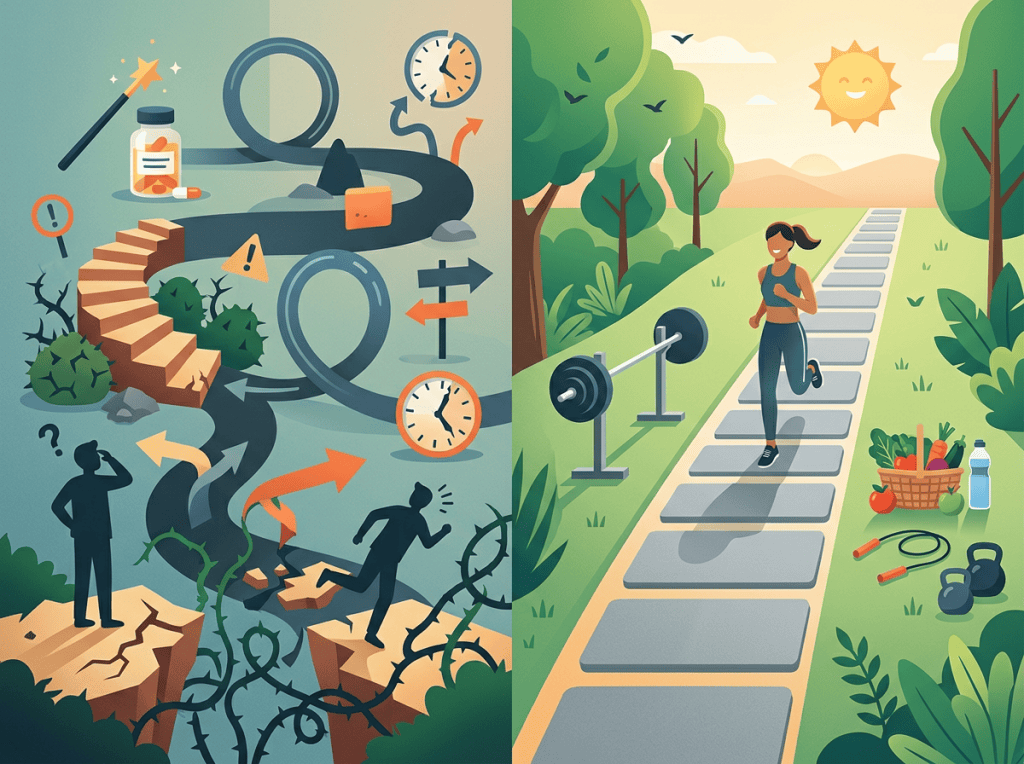


Could the fitness rules you follow slow your progress? Common fitness myths can make fat loss harder and muscle building seem out of reach.
Years of trial and error, plus work with clients of different ages and body types, taught me one lesson. Hard work can look like a plan when it is not. These five myths can block fitness progress and keep your dream body out of reach.

Key Takeaways
- Common fitness myths can lead you away from steady progress.
- More effort does not always mean better results.
- Fat loss and muscle building rely on habits you can sustain.
- Your routine should support training, recovery, and daily life.
- Small, consistent steps can bring you closer to your dream body.
5 Fitness Myths That Kept Me From My Dream Body (I Thought I Was Doing It Right)
Ever feel like you’re doing everything right in the gym and in the kitchen, but your dream body stays just a dream? You’re not alone. Conflicting advice makes useful habits hard to identify.

Why doing “everything right” can still leave you frustrated
You may follow strict rules, such as avoiding food after 8 p.m. or choosing high-rep workouts to get toned. These common fitness myths sound convincing, but they may not fit your needs or goals. When effort brings no expected change, confusion can last for years.
How fitness misinformation can derail consistent progress
Fitness misinformation often spreads through bold promises and products without useful support. Rules like cutting out carbs after dark can distract you from steady training, balanced meals, and recovery. Learning what works takes time, careful research, and attention to your body’s response.
Myth: More Cardio Is Always Better for Fat Loss
Myth #1: More cardio is always better for fat loss may make every workout feel longer. Cardio can support your goals, but exercise alone cannot fix eating habits that do not fit your needs.
What cardio can—and can’t—do for your goals
Cardio for fat loss can increase energy use and support heart health. Choose activities you enjoy, such as basketball, hill sprints, climbing, or active play. Short bursts of hard effort followed by easier movement can structure intervals.

How excessive cardio may interfere with recovery and muscle-building
Long or hard sessions can leave less energy for other training. When worn down, you may struggle to stay consistent or give your muscles time to recover. Both recovery and muscle building matter when you want to get stronger.
Build a balanced routine with strength training, cardio, and rest
Pair strength training and cardio in a way that fits your schedule and fitness level. Add rest days so your body can recover, and adjust workouts when fatigue builds. A routine you can maintain helps more than adding cardio to every session.
Myth: Extreme Calorie Restriction Is the Fastest Way to Lose Weight
The claim behind myth #2: extreme calorie restriction is key to losing weight fast can make strict diets seem appealing. Yet it can be hard to maintain, leaving you tired, hungry, or less able to follow your routine.

Why severe restriction can be difficult to sustain
Skipping meals does not slow your metabolism when your total daily intake is adequate. Meal timing matters less than the calories you eat over a full day. Fat gain can occur when your intake exceeds your expenditure, creating a calorie surplus.
Severe limits can make everyday eating feel like a test of willpower. A flexible approach can help you avoid diet burnout and support sustainable weight loss.
How to approach a manageable calorie deficit
A calorie deficit for fat loss means taking in fewer calories than your body uses. You do not need to rely on a fad diet or cut out entire meals to create one. Choose an eating pattern you can maintain over time, with foods that keep you satisfied and support your daily needs.
Myth: You Can Target Fat Loss in Specific Body Parts
Myth #3: You can target fat loss in specific body parts sounds convincing. However, your body does not burn fat only from the area you train. Healthy habits can support overall fat loss, while genetics affect where fat changes show first.
Why crunches don’t selectively burn belly fat
Crunches strengthen your abdominal muscles, but they do not directly remove belly fat. The same is true of exercises aimed at arm fat. Spot reduction is a myth: training one area does not make your body lose fat only there.

What to focus on instead: overall fat loss and strength
For visible abs, choose eating patterns that support your goals and incorporate strength training for several muscle groups. Bench presses, deadlifts, and squats engage your core during larger movements. Crunches can build core strength, but they are not required for visible abs.
Myth: You Need Extreme Soreness for a Workout to Count
Myth #4: you must feel extreme soreness for a workout to count. This common trap can make you push too hard. The “no pain, no gain” idea is misleading because workout soreness does not prove a good session.

Why soreness is not a reliable measure of workout quality
Workout soreness can follow a new or harder workout, but it does not prove progress. Watch how you move and feel, rather than just muscle aches.
Track progress through strength, consistency, and recovery
Track changes in your strength, workout habits, and energy. Strength and recovery both matter. Recovery gives muscles time to heal and grow, so schedule rest days.
If a muscle hurts for several days, pause moves that strain it. For sore triceps, skip overhead presses and rope pushdowns until pain eases. Overtraining is real, and recovery needs may rise with age.
Myth: Carbs Are the Enemy of a Lean Physique
Myth #5: Carbs are your enemy for a lean physique may lead you to cut foods your body can use. Eating too few carbs for a long time may leave you weak during workouts or foggy at work.
How quality carbohydrates can fuel training and recovery
Quality carbohydrates for energy can help you train with focus and maintain effort. Carbs for muscle recovery can support your body after hard sessions as part of a balanced diet.
Carb backloading may suit some routines, but it is a tool, not a magic fix. Your overall food choices and intake still matter.
Choose satisfying carbohydrate sources that fit your routine
Useful carbohydrate sources include cereal, bread, potatoes, and rice. Choose foods you enjoy and can fit into your meals and training schedule.
Cutting wheat may lower calorie intake for some people because many packaged foods contain wheat. Gluten avoidance is important for people with celiac disease or gluten intolerance, but wheat is not a problem for everyone.
What These Fitness Myths Have in Common
Many fitness myths that sabotage progress promise strict rules or fast results. A steady routine built around your needs is easier to maintain than a fad diet or punishing workout plan.
Why quick fixes and rigid rules can distract from sustainable habits
Meal timing myths can make eating feel more complex than it needs to be. Eating after 8 p.m. or choosing carbs at night does not automatically cause fat gain. This remains true when daily calorie intake stays within your needs.
You do not have to eat every three to four hours, either.
How consistency matters more than perfect timing or extreme effort
Choose sustainable fitness habits that fit your schedule and food preferences. Motivation based only on appearance or a fast deadline may fade. Realistic routines can support long-term consistency.
Focus on repeatable choices, not perfect timing or extreme effort.
How to Build a Training Plan That Supports Your Goals
A balanced workout plan should match your schedule, fitness level, and goals. Choose activities you can maintain, and leave time for rest.
Combine resistance training with cardio you can maintain
Pair resistance training and cardio in a way that suits you. Start with compound movements, such as squats, bench presses, and deadlifts, to train several muscles at once.
For cardio, choose an activity you enjoy. Try climbing, hill sprints, basketball, or high-intensity intervals.
Prioritize gradual progression and adequate recovery
If you are new to training, begin with light weights and add a little effort each week. This gradual strength progression helps build skill and strength at a steady pace.
Schedule rest days to help your body recover. If pain or an injury affects your training, ease up and give yourself time to heal.
How to Eat for Fat Loss and Muscle Without Extreme Rules
Fat loss and muscle growth depend on nutrition and training. A balanced eating pattern fuels workouts, supports recovery, and builds consistency without strict food rules.
Focus on a balanced, sustainable eating pattern
Sustainable eating for fat loss means choosing habits you can maintain. Include filling, nourishing foods and enough protein for muscle-building nutrition. Intermittent fasting cannot prevent fat gain if you eat more calories than your body uses.
Make room for foods you enjoy to support long-term consistency
You do not need to avoid foods you enjoy. Long periods of restriction can leave you very hungry and more likely to overeat. Include favorite foods in your routine, so your plan feels realistic over time.
How to Measure Progress Beyond the Scale
Your weight shows only one kind of change. To measure fitness progress, notice how you feel, what you can do, and how your routine changes over time.
Notice changes in strength, energy, and workout performance
Track compound movements, such as squats or presses. Start with a manageable load, then add weight or reps in small steps as you grow stronger. This clearly shows your strength progress and workout performance.
Pay attention to your energy, too. The writer felt weaker and foggier during long stretches of low-carb eating. If you notice similar changes, record them in your training notes.
Use consistent check-ins to assess trends over time
Use simple fitness check-ins to review your notes, energy, and training. Compare trends over time rather than judging progress by a single workout or weigh-in. You do not need a strict schedule; choose a rhythm you can maintain.
When to Adjust Your Fitness Routine
Your training plan should support your health, not leave you worn down. Pay attention to pain, energy, and recovery between workouts.
Recognize when fatigue or persistent soreness calls for recovery
Some soreness can follow a tough workout, but sharp or lasting pain means you should pause. If your triceps hurt for several days, avoid painful moves and give the muscle time to heal. A mild chest muscle strain may need extra rest, too.
Plan regular rest days, and allow more recovery time when your body needs it. Age, sleep, and workout intensity can affect muscle soreness and recovery. If pain continues or worsens, seek advice from a health professional.
Make small changes based on progress, preferences, and well-being
If your energy or progress stalls, adjust your workout routine with small changes. You might reduce the weight, shorten a session, or add recovery time. Track how you feel so you know what helps.
Choose cardio you enjoy. If steady jogging feels like a chore, try cycling, swimming, or brisk walking. A plan that fits your preferences is easier to maintain and can support a sustainable fitness routine.
Conclusion
This fitness myth recap shows a simple truth: lasting fat loss rarely requires extreme rules or perfect meal timing. Watch your total daily calories, choose foods you can enjoy long-term, and pair steady eating with regular exercise.
For sustainable muscle-building, use compound movements in strength workouts, add cardio you enjoy, and give your body time to recover. Rest is part of training, not proof that you are falling behind.
Your fitness progress may appear as better strength, energy, and consistency before it appears on the scale. Build habits that fit your life, including time for activities beyond the gym. Then you are more likely to keep moving toward your goals.




Leave a comment