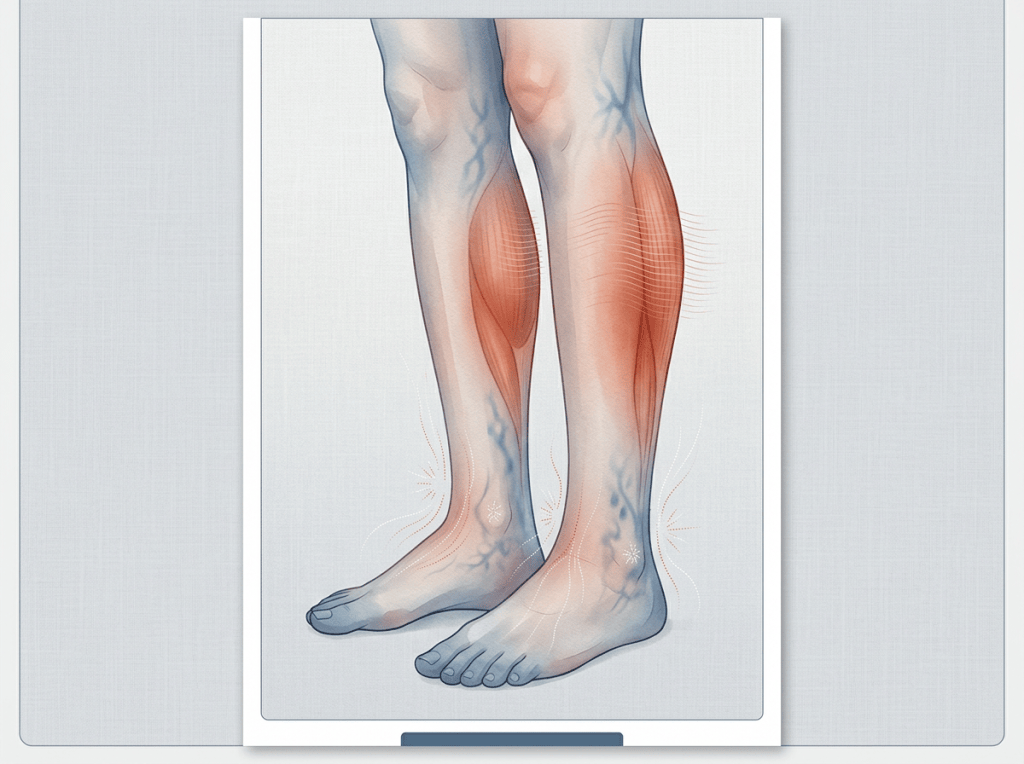


Have you wondered whether sensations in your legs mean more than everyday aches? Many people overlook subtle changes and blame aging or fatigue. When something is wrong with your legs, you may expect to see swelling, bruising, redness, or a rash.
But some important warning signs cannot be seen at all; they are sensations or changes in function that only you can feel. In medicine, a sign is visible to others, while a symptom is noticed only by the person experiencing it. This difference matters because many people miss early warning signs of vascular disease and dismiss them as normal.
Your legs can warn of conditions affecting your circulation, nerves, brain, and spine.
By listening to your body, you can act before a minor issue becomes a major health concern. Here are seven invisible leg symptoms worth paying attention to, so you can prioritize your health and well-being.

Key Takeaways
- Invisible symptoms in your legs can signal serious health issues.
- Listening to your body is crucial for early detection.
- Common visible signs may not tell the whole story.
- Understanding the difference between signs and symptoms is essential.
- Timely medical evaluation can significantly improve outcomes.
Why Your Legs Can Signal Hidden Health Problems
Your legs can reveal important clues about your overall health. They are farthest from your heart and brain, so blood flow, nerve, and spine problems may affect them. Many leg symptoms have harmless explanations, including exercise fatigue or nerve pressure from awkward sitting. Still, persistent or unusual signs need attention.
Knowing this link can help you spot problems early. Here are reasons your legs can signal hidden health issues:
- Circulatory System Vulnerability: Your circulatory system is a complex network that delivers oxygen and nutrients throughout your body. When blood flow is disrupted, it can lead to serious conditions.
- Nerve Sensitivity: The nerves in your legs are sensitive to changes in your body. Symptoms like tingling or numbness can indicate nerve compression or damage.
- Spinal Health Impact: Issues with your spine can affect nerve signals to your legs, leading to weakness or pain.
- Barometer for Systemic Health: Conditions such as peripheral artery disease, deep vein thrombosis, and even strokes can manifest as leg symptoms.
Ignoring these signals may let hidden conditions worsen and cause severe health problems. Symptoms alert you that something may be wrong. See leg symptoms as clues to wider health problems, not isolated complaints.

Many leg symptoms have harmless explanations, but certain patterns can indicate problems with your circulation, nerves, brain, or spine. Awareness of these links can help you act and seek medical advice when needed.
How Your Circulation, Nerves, and Spine Affect Your Legs
Your legs rely on circulation, nerve function, and spinal health to work well. Your circulatory system sends oxygen-rich blood to leg muscles and tissues through arteries and veins. Narrow or blocked vessels can cause pain, cramping, and tissue damage.
Understanding vascular disease and legs is important for recognizing circulation problems. This term covers conditions that affect your circulatory system. Hardened or weakened blood vessels can limit blood flow, causing leg discomfort or pain during activity.
Nerve function in legs also supports healthy movement and feeling. The nervous system sends signals between your brain and legs. Peripheral nerve damage may cause burning, tingling, or numbness.
Your spine contains nerve roots that control leg function. Herniated discs and spinal stenosis can press these nerves, causing spine and leg symptoms. Leg weakness or numbness may mean you should consult a healthcare professional.
Understanding how circulation, leg health, nerve function, and spinal integrity are connected can help you spot serious symptoms. This basic knowledge prepares you for the warning signs in the next section.

The 7 Warning Signs in Your Legs That Could Indicate Serious Health Problems
Your legs can offer important clues about your health. Learn these seven warning signs and know when to seek medical care.
1. Calf Pain That Starts When You Walk
What This Symptom Feels Like
Calf pain that starts when you walk may feel like cramping, aching, or heaviness. It usually improves after a few minutes of rest.
The Condition It May Indicate
This repeated pattern may signal peripheral artery disease (PAD). Narrowed arteries limit blood flow and cause symptoms during activity.
When to Seek Medical Help
See a healthcare provider if this pain keeps returning. Untreated PAD can cause non-healing wounds and may lead to amputation.
2. Unexplained Pain Deep Inside One Calf or Thigh
What This Symptom Feels Like
Unexplained pain deep inside one calf or thigh may feel like a cramp, pulled muscle, or deep ache. It can appear without a clear cause.
The Condition It May Indicate
This pain may signal deep vein thrombosis (DVT), a blood clot in a deep vein. A clot can become life-threatening if it reaches the lungs.
When to Seek Medical Help
Get immediate medical help for this pain, especially if accompanied by swelling, warmth, or redness.
3. Burning, Tingling, or “Pins and Needles”
What This Symptom Feels Like
An occasional leg that “falls asleep” is usually harmless. Persistent burning, tingling, prickling, electric-shock feelings, or numbness needs attention.
The Condition It May Indicate
These symptoms may indicate peripheral neuropathy, which can result from diabetes, vitamin deficiencies, or other conditions.
When to Seek Medical Help
Consult a doctor if these sensations persist or return often. Early care may prevent more nerve damage.
4. Sudden Weakness or Numbness in One Leg
What This Symptom Feels Like
If one leg suddenly becomes weak, numb, or hard to control, think stroke—not only a pinched nerve.
The Condition It May Indicate
This symptom could indicate a stroke. A stroke can affect one side of the body and requires immediate action.
When to Seek Medical Help
Call 911 if sudden weakness or numbness occurs, even when it improves quickly.
5. A Foot or Leg That Suddenly Feels Unusually Cold
What This Symptom Feels Like
Some people naturally have cold feet. A new cold feeling in one foot or leg can signal severely reduced blood flow.
The Condition It May Indicate
This may signal acute limb ischemia, which severely restricts blood flow. Pain, numbness, weakness, or trouble moving makes it more concerning.
When to Seek Medical Help
Seek emergency care for this coldness, especially if accompanied by other concerning symptoms.
6. Leg Weakness Combined with Bladder or Bowel Changes
What This Symptom Feels Like
Leg weakness or numbness with severe lower-back pain is alarming. Numbness around the buttocks or inner thighs also needs urgent attention.
The Condition It May Indicate
Trouble urinating, lost bladder control, or lost bowel control may indicate cauda equina syndrome. This condition requires immediate surgical treatment.
When to Seek Medical Help
Do not delay medical care when these symptoms occur together.
7. An Uncontrollable Urge to Move Your Legs at Night
What This Symptom Feels Like
At rest, your legs may feel crawling, pulling, throbbing, itching, or otherwise uncomfortable. Moving them may bring temporary relief.
The Condition It May Indicate
These symptoms may indicate restless legs syndrome (RLS). RLS can disrupt sleep and may relate to iron deficiency or peripheral neuropathy.
When to Seek Medical Help
Consult a healthcare provider if these urges disturb your sleep or daily life.

When to Call 911 Immediately
Your legs can show serious health problems, so knowing when to call 911 matters. Some symptoms need emergency help right away. Fast action can mean the difference between life and death.
Here are key situations that require an urgent call to 911:
- Sudden weakness or numbness in one leg: This could indicate stroke symptoms in your legs. If you notice this change, time is critical.
- A foot or leg that suddenly feels cold and painful: This may suggest acute limb ischemia emergency. Quick medical intervention is essential to restore blood flow.
- Leg weakness combined with bladder or bowel changes: This can signal cauda equina syndrome, a serious condition that requires immediate care.
- Signs of a pulmonary embolism: If you experience sudden shortness of breath or chest pain along with leg pain or swelling, call 911 right away.
Severe dizziness, confusion, or difficulty breathing with leg problems also requires an emergency call. Recognize these emergency leg symptoms and act quickly.
Remember, with a stroke, “time is brain.” Delaying treatment can cause permanent disability or death. Trust your instincts, and do not wait if something feels wrong.

When to Schedule a Medical Evaluation
Your legs do not need to look different to warn you that something is wrong. For symptoms that develop gradually or keep returning, it is essential to schedule a medical evaluation. Ignoring these signs could cause more serious health problems later.
Many people overlook mild discomfort. Sometimes, what you feel—but cannot see—is the most important warning. Persistent calf pain while walking, recurring burning or tingling, nighttime leg discomfort, or unexplained swelling should prompt a medical appointment.
Doctors group symptoms into three main types:
- Remitting: Symptoms that improve or disappear completely.
- Relapsing: Symptoms that were previously experienced and resolved, then return.
- Chronic: Symptoms that are long-lasting and may require ongoing management.
Even mild or occasional symptoms may signal an underlying condition that needs treatment. A medical evaluation can find peripheral artery disease, peripheral neuropathy, or restless legs syndrome early.
During your appointment, discuss your symptoms in detail. Be ready to explain:
- When the symptoms started and how often they occur.
- Any activities that trigger or worsen the symptoms.
- How the symptoms affect your daily life.
With this information, your primary care physician can perform an initial evaluation and refer you to a specialist if needed. Early intervention is key to managing your leg health effectively.

Risk Factors That Increase Your Chances of Leg-Related Health Issues
Your legs can reveal much about your overall health. Understanding the risk factors for leg health problems helps with prevention and early care. Lifestyle choices and medical conditions can raise your risk of serious leg problems.
Smoking is one of the most important risk factors for leg health problems. It damages blood vessels and is a leading cause of peripheral artery disease. Quitting may be the most powerful change you make for better circulation.
Managing existing health conditions is also vital. High blood pressure, high cholesterol, and diabetes can cause leg problems, including peripheral artery disease and neuropathy. Medication and healthy lifestyle changes can help control these conditions and lower your risk.
A sedentary lifestyle is another major risk factor. Long periods of sitting or standing are risk factors for deep vein thrombosis and can reduce circulation. Aim for at least 30 minutes of moderate exercise most days to keep blood moving.
Your diet also plays an important role. A heart-healthy diet with fruits, vegetables, whole grains, and lean proteins can lower your risk. Limit saturated fats, trans fats, and sodium to support healthy blood vessels.
Age and family history are risk factors you cannot change. As you grow older, your risk of leg health problems increases. A family history of vascular disease means you should closely monitor your leg health.
You cannot change some risk factors, such as age and genetics. However, lifestyle changes can lower your chance of serious leg problems. Understanding these peripheral artery disease risk factors, deep vein thrombosis risk factors, and neuropathy risk factors helps you protect your legs.

How Doctors Diagnose the Cause of Leg Symptoms
Learning how to diagnose leg symptoms can help protect your health. If your legs hurt or feel unusual, see your primary care physician first. The doctor will begin a medical evaluation for leg pain and seek its cause.
During your visit, your doctor may take these steps:
- Take a detailed medical history, including any previous health issues.
- Perform a physical examination to assess your leg strength and sensation.
- Ask about the nature and duration of your symptoms.
If needed, your doctor may refer you to a specialist for further evaluation. Common tests support vascular disease diagnosis and neuropathy testing.
- Ankle-Brachial Index (ABI): This test measures blood flow in your legs.
- Vascular Ultrasound: It visualizes blood vessels to detect clots or blockages.
- Nerve Conduction Studies: These tests evaluate peripheral neuropathy.
- Imaging Studies (like MRI): These help examine the spine for conditions such as herniated discs.
Doctors may also order blood tests to check for:
- Diabetes
- Vitamin deficiencies
- Kidney function
- Other underlying conditions
An accurate diagnosis guides effective treatment. Early medical evaluation for leg pain can prevent more serious complications. Your doctor compares your history, examination, and test results to separate conditions with similar symptoms.

Treatment Options for Common Leg-Related Health Conditions
Learning about treatment options for leg-related health conditions helps you take control of your health. Each condition needs a different approach, and early care often brings better results.
If you have peripheral artery disease, your doctor may suggest lifestyle changes and medicines. This treatment for peripheral artery disease can improve blood flow and reduce the risk of blood clots. In some cases, minimally invasive procedures, such as angioplasty or stenting, may open blocked arteries.
For people with deep vein thrombosis (DVT), deep vein thrombosis treatment usually includes anticoagulant medicines. These medicines prevent clots from growing and reduce the risk of complications, such as pulmonary embolism. Your healthcare provider will explain the dosage and treatment length.
When treating neuropathy, doctors focus on managing the underlying cause. For example, controlling blood sugar is crucial for people with diabetes. Doctors may also prescribe medicines to ease pain and improve nerve function, helping your legs feel better.
If you have symptoms of restless legs syndrome, treatment may include lifestyle changes and iron supplements when needed. In some cases, medicines can also target symptoms. Discuss these choices with your healthcare provider to find the most effective plan.

Each plan is tailored to your condition, its severity, and your overall health. By staying informed and proactive, you can manage your health journey more effectively.
Lifestyle Habits That Support Healthy Legs
Incorporating beneficial habits into your daily routine can support leg health. One effective way to improve vascular health is to choose a heart-healthy diet. Eat fruits, vegetables, whole grains, and lean proteins, while limiting saturated fats, trans fats, and sodium.
Staying active is equally important. Aim for at least 30 minutes of moderate-intensity exercise for leg health most days. Walking, cycling, or swimming improves blood flow and strengthens leg muscles. Strength training also builds muscle and supports joint health.
Another critical step is quitting smoking for leg health. Smoking is a primary risk factor for vascular disease and can damage blood vessels, causing poor circulation. Quitting smoking is one of the best decisions you can make for your overall health.
Maintaining a healthy weight and staying hydrated support leg health. Avoid prolonged sitting or standing, which can cause circulation issues. Take breaks to stretch and move throughout the day.
These healthy leg habits support leg health and improve overall cardiovascular and metabolic well-being. Small, consistent changes can lead to significant improvements over time.

Prevention Tips to Keep Your Legs Healthy Long-Term
Leg care supports your overall health. Simple lifestyle changes can help with preventing leg health problems and improve your well-being.
Manage health conditions to support vascular disease prevention. Control your blood pressure, cholesterol, and blood sugar. Regular check-ups with your healthcare provider can help detect problems early and enable timely treatment.
Staying active supports long-term leg health. Aim for at least 150 minutes of moderate aerobic activity each week. Try walking, swimming, or cycling, and maintain a healthy weight to reduce leg strain and complications.
Avoid tobacco because smoking damages blood vessels and can cause serious conditions, such as peripheral artery disease. If you smoke, seek support to quit. Your legs will thank you for it!
Proper foot care matters, especially if you have diabetes or peripheral artery disease. Check your feet often for cuts or sores, and keep them clean and moisturized. These steps can prevent wounds and infections that may cause serious complications.
Make these habits part of your daily routine for lifelong protection. The choices you make today can protect your legs for years to come. Prevention is always better than cure.
Key Takeaways About Leg Warning Signs
Your legs can signal serious health problems. Listening to your body can help you spot possible problems early. These leg warning signs matter for your overall health.
Keep these leg symptoms to watch for in mind:
- Calf pain that occurs when you walk
- Unexplained pain deep inside one calf or thigh
- Burning, tingling, or a “pins and needles” sensation
- Sudden weakness or numbness in one leg
- A foot or leg that suddenly feels unusually cold
- Leg weakness combined with bladder or bowel changes
- An uncontrollable urge to move your legs at night
Many leg symptoms have harmless causes, but some patterns need medical care. Sudden weakness or numbness may signal a serious condition. Knowing when to seek help for leg pain can protect your health.
Remember, your body is telling you something is wrong. Do not ignore changes, even subtle ones. Talk with your doctor about leg symptoms, and keep listening to your body.
Conclusion
Your legs do more than move you; they can reveal important clues about your health. Knowing the 7 Warning Signs in Your Legs That Could Indicate Serious Health Problems supports overall well-being. Ignoring subtle changes can have serious effects, especially with vascular diseases.
Leg health awareness helps you notice unusual sensations and symptoms. Persistent pain, tingling, or weakness should not be ignored. These signs may show that something is wrong.
Knowing when to seek medical help for leg symptoms matters. Early detection can improve treatment results. Your doctor can provide evaluations and guide you toward appropriate care.
Taking action now can help protect your long-term health. Your legs do not need to look different for a problem to exist. What you feel matters, so listen to your body and seek help when needed.




Leave a comment