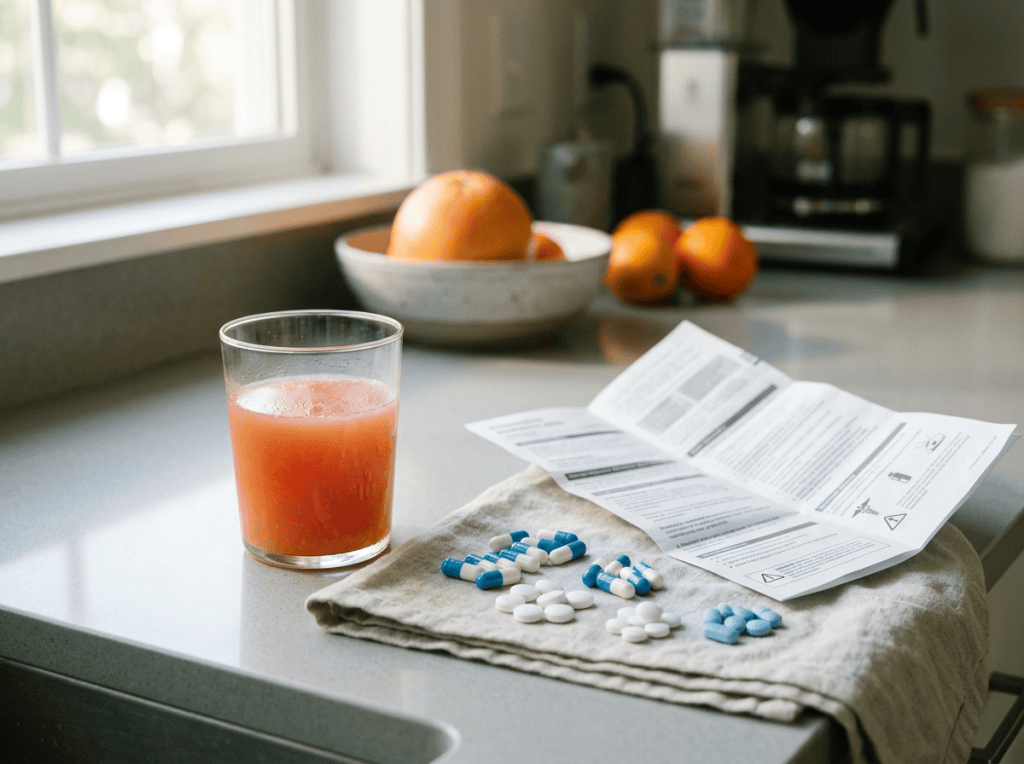


Have you wondered how grapefruit juice might affect your health? IF you are over 40 and take medications, this question matters. It’s not that grapefruit juice is unhealthy on its own, but it can interact with certain medications and change how they work.
As we age, we are more likely to take prescription or over-the-counter medications. This makes it important to understand potential interactions. Grapefruit juice can raise some medication levels too high or reduce absorption, so check labels and ask a pharmacist.
This article explains how grapefruit juice affects medications. This information cannot replace personalized medical advice. Your health journey is unique, and understanding these interactions can help you make informed choices.

Key Takeaways
- Grapefruit juice can affect how medications work in your body.
- Consult with a healthcare professional before making dietary changes.
- Medication interactions can increase with age.
- Always check medication labels for warnings.
- Educate yourself about food-drug interactions.
1. The One Juice You Should Stop Drinking After 40, Why Grapefruit Deserves a Second Look
Many people enjoy all types of juice, especially at breakfast. I’m not going to lie to you: I love juice. Apple juice tastes sweet, while orange juice offers a zesty burst. These drinks can provide a delightful breakfast treat or a refreshing pick-me-up.
Grapefruit juice has a reputation for being healthy. It tastes tart and refreshing, and it contains vitamin C. This makes it popular with people seeking a nutrient-rich diet, but age brings specific concerns.
Your health status and lifestyle may change in your 40s. Grapefruit juice is not automatically unsafe, but review your habits carefully. Consider these key points:
- Medication Use: Many people start taking medications in their 40s, which can complicate how grapefruit juice affects your body.
- Health Changes: Conditions that develop over time can alter how your body metabolizes substances, including grapefruit juice.
- Dietary Adjustments: As you become more health-conscious, it’s crucial to review your dietary choices, including your juice habits.
Before pouring grapefruit juice, review your complete medication list. Knowing how it interacts with your medications is vital for your health. The next sections explain these interactions and what you should know as you navigate your health in your 40s and beyond.

2. How Grapefruit Juice Interacts With Common Medications
Understanding how grapefruit juice interacts with medications matters, especially as you age. Grapefruit juice can change how your body processes certain drugs. A refreshing glass may change a medication’s effects.
There are two main ways grapefruit juice can affect medication.
2.1 When Grapefruit Allows Too Much Medication Into Your Bloodstream
One key interaction occurs when grapefruit juice prevents your body from properly breaking down a drug. More of the drug then enters your bloodstream than intended. This can cause stronger side effects.
- Higher drug levels can lead to unexpected reactions.
- Commonly affected medications include certain statins and blood pressure drugs.
- Always check if your medication has warnings regarding grapefruit juice.
2.2 When Grapefruit Reduces the Amount Your Body Absorbs
Grapefruit juice can also reduce how much of some medications your body absorbs. Less of the drug reaches your bloodstream, which may make treatment less effective. The type of medication, dose, formulation, and your biology can affect this interaction.
- The type of medication matters; not all are affected equally.
- Dosage and formulation can change the interaction.
- Your individual biology plays a role in how these interactions manifest.
2.3 Why the Interaction Is Not Always Predictable
These interactions can vary widely. Several factors matter, including the medication, the amount of juice, and your metabolic response. Your body may respond differently to the juice and medication.
- The specific medication you are taking.
- The amount of grapefruit juice consumed.
- Your unique metabolic response to both the juice and the medication.
Grape juice differs from grapefruit juice, so check medication instructions before substituting one for the other. Most juices I love to mix up, blend, and enjoy cold. But as I’ve gotten older, I noticed that my body doesn’t process juice like it used to when I was younger.

3. The CYP3A4 Enzyme: Your Body’s First Line of Defense
CYP3A4 is an essential enzyme that helps your body process many medications. It is found mainly in the small intestine and liver, where it breaks down drugs before they reach your bloodstream. Understanding CYP3A4 matters, especially if you drink grapefruit juice, which can change how this enzyme works.
What CYP3A4 Does in Your Small Intestine
In your small intestine, CYP3A4 acts as a gatekeeper for medications. It helps control how much medicine enters your bloodstream. When medications work well, they can be effective.
How Natural Compounds in Grapefruit Block the Enzyme
Grapefruit contains natural compounds called furanocoumarins. These compounds can inhibit CYP3A4 and stop it from breaking down certain medications. As a result, more of these drugs may enter your bloodstream than intended.
Why the Effect Can Last Beyond a Single Meal
Grapefruit’s effect on CYP3A4 does not end after one meal. Even after you drink grapefruit juice, the enzyme may need time to recover. Medication interactions may last longer than expected, so ask your healthcare provider how long to wait before taking your medications.

In summary, grapefruit juice has long enjoyed a healthy reputation because it is tart, refreshing, and packed with vitamin C. The reason has little to do with grapefruit juice being “bad” for you. In doing so, grapefruit allows too much medication to enter the bloodstream, causing unintended consequences.
4. Drug Transporters and How Grapefruit Disrupts Them
Your small intestine contains an enzyme called cyp3a4. This enzyme helps break down many medications before they enter the bloodstream. Drug transport proteins move medications into and out of intestinal cells and other tissues, helping control absorption.
Grapefruit juice contains compounds that can interfere with these transport proteins. It may increase absorption for some medications. With other drugs, it can reduce the amount your body absorbs, potentially making the treatment less effective.
Not every medication reacts the same way when combined with grapefruit juice. These interactions can be unpredictable. A safe experience with one drug does not guarantee the same result with another drug in that category.
Always check the exact generic and brand name on your pharmacy label, or ask your pharmacist.

Grapefruit juice can disrupt drug transport proteins and cause unexpected changes in medication absorption. Knowing why this juice can interfere with your health helps you manage medication safely.
5. Why This Warning Matters More After 40
Turning 40 can change how you manage your health and medications. As you age, you may need medication more often.
This is especially true for chronic conditions like high cholesterol, blood pressure, and anxiety. Understanding how grapefruit juice interacts with these medications is crucial for your health.
As you enter this new chapter, consider why this warning matters more after 40:
- Medication Use Increases With Age: Many people find themselves on multiple prescriptions after 40. This can complicate how your body reacts to substances like grapefruit juice.
- The Intermittent Fasting Connection: If you practice intermittent fasting, timing your medications can become tricky. It’s important to remember that grapefruit is not a fasting requirement or a shortcut to better health.
- A Simple Conversation Can Prevent Problems: Bringing a complete list of your prescriptions, supplements, and fasting habits to your healthcare provider can help identify any potential interactions.
It’s essential to recognize that turning 40 does not suddenly change the way grapefruit behaves in your body. The concern grows because medication use commonly increases with age. A brief discussion with your doctor or pharmacist can clarify whether to avoid grapefruit or choose a safe alternative.

6. Cholesterol-Lowering Statins Affected by Grapefruit
Some medications that may interact with this juice include cholesterol-lowering statins such as simvastatin, lovastatin and atorvastatin. These statins are commonly prescribed for people over 40. This section explains how grapefruit affects these medicines.
Simvastatin and Lovastatin
Simvastatin and lovastatin are statins often discussed in relation to grapefruit juice. They lower cholesterol, but grapefruit can raise their levels in your bloodstream. This higher exposure may increase muscle side effects, including pain or weakness.
Atorvastatin and Other Common Statins
Atorvastatin is another widely used statin, but its grapefruit interaction is less clear. Grapefruit does not interact with every drug in a medication class. Some studies suggest grapefruit may affect atorvastatin less than simvastatin or lovastatin.
Clinical advice may vary, so ask your healthcare provider about your medication’s specific risks.
What This Means for Your Morning Routine
Timing matters in your morning routine. If you take statins, check whether grapefruit juice or fasting conflicts with your instructions. Drinking grapefruit juice shortly before or after your dose could change its effectiveness.
Keep a steady schedule, and discuss changes with your doctor or pharmacist.
If you take cholesterol-lowering statins, watch your grapefruit juice intake. Watch for unexplained muscle pain, marked weakness, unusual fatigue, or dark urine. If these symptoms appear, seek medical attention promptly.
Never stop or change your medication without professional advice, because doing so could cause serious health consequences.

7. Blood Pressure Medicines That May Interact
Grapefruit can affect some blood pressure medicines. This grapefruit medication interaction may cause more side effects or make treatment less effective. It can interact with certain medicines, including some calcium channel blockers, especially if you are over 40 and managing blood pressure.
Regular blood pressure checks matter because high blood pressure often causes no clear symptoms. Use caution with medicines such as felodipine or nifedipine. This grapefruit-medication interaction can vary by drug and formulation, so not every calcium channel blocker is affected in the same way.

- Dizziness
- Flushing
- Headaches
- Faintness
- Unusually low blood pressure readings
Because high blood pressure may cause no symptoms, feelings alone cannot indicate whether your blood pressure medication is working. Always ask your doctor or pharmacist about blood pressure medication and grapefruit juice. Ask whether to avoid grapefruit juice, choose another juice, or take your medicine with food.
Never skip your blood pressure medication to enjoy grapefruit. Protect your health by discussing medication-related diet limits openly with your healthcare providers.
8. Heart Rhythm Drugs, Anti-Anxiety Medicines, and More
Some medications for heart rhythms and anxiety may interact with grapefruit juice. These interactions can affect your health, so learn about the possible risks. Below, we explain the medication groups that grapefruit juice may interact with.
Drugs for Abnormal Heart Rhythms
Drugs used to treat abnormal heart rhythms may react with grapefruit juice. Grapefruit may increase their effects and cause serious side effects. Ask your healthcare provider about possible interactions.
Anti-Anxiety Medications
With anti-anxiety medicines, grapefruit juice may increase sedative effects. This interaction may make you feel drowsy or dizzy. Risk depends on the medicine, so check with your doctor.
Corticosteroids for Ulcerative Colitis or Crohn’s Disease
Corticosteroids used for conditions such as ulcerative colitis or Crohn’s disease also need attention. Grapefruit may not interact directly with every corticosteroid. Follow your treatment plan, and do not change it based on general warnings.
Organ-Transplant Medicines and Antihistamines
Organ-transplant medicines that help prevent rejection are critical to your health. Grapefruit juice can change their levels in your body, so keep a consistent regimen. Antihistamines have different interaction warnings, so read their labels carefully.
These medication categories are only a starting point. The active ingredient, formulation, and dose determine the right advice. Always verify each interaction for every specific medicine using the prescription label, official patient information, or a pharmacist.
9. Can You Separate the Juice and Medicine by a Few Hours?
Can you simply separate the juice and medicine by a few hours? The answer is not necessarily. Timing may seem helpful, but grapefruit compounds can affect your body after you consume them.
Grapefruit’s effect on intestinal enzymes can last well beyond breakfast. Taking a pill at night and drinking grapefruit juice in the morning may not eliminate the interaction. The effect’s length and strength depend on your specific medication.
Do not create your own schedule; follow the official medication guide. Ask your pharmacist whether grapefruit must be avoided, limited, or separated by a medically established interval. Fasting may encourage timing experiments, so professional guidance matters.
10. Signs of a Possible Drug Interaction
When grapefruit juice interacts with certain medications, you may notice unexpected effects. Learn the signs of a possible interaction and watch for health changes after drinking grapefruit juice. These symptoms may feel stronger than the effects of your usual medication.
Unexpected or Severe Side Effects to Watch For
After combining grapefruit with your medication, you might notice:
- Severe dizziness
- Fainting spells
- Unusual weakness
- Palpitations
- Excessive drowsiness
- Confusion
- Swelling
- Unexplained muscle pain
Seek prompt medical guidance if you develop unexpected or severe side effects after combining grapefruit with medicine. These signs may indicate a serious interaction and help you choose the right course of action.
When to Call 911 Immediately
In some situations, you need immediate medical attention. Call 911 for difficulty breathing, loss of consciousness, severe chest pain, signs of a stroke or another medical emergency.
- Difficulty breathing
- Loss of consciousness
- Severe chest pain
- Signs of a stroke
- A serious allergic reaction
A serious allergic reaction also needs immediate care. These symptoms may signal a medical emergency, so quick action can save your life.
When to Contact Your Doctor Promptly
If concerning symptoms seem less severe, contact your doctor or pharmacist without delay. Be ready to share these details:
- The exact medication you are taking
- The dosage
- The amount of grapefruit juice consumed
- The timing of consumption
Do not take extra doses or stop your medication without professional advice. Put your health and safety first.
11. Practical Tips for Staying Safe While Intermittent Fasting
Intermittent fasting and medication safety require careful planning, especially when medicines are involved. These practical steps can help you manage fasting safely.
Read Medication Labels and Patient Guides Carefully
Start by reading your medication labels and patient guides carefully. They may list important warnings about grapefruit, other substances, food, and fasting.
Ask Your Pharmacist the Right Questions
Your pharmacist can provide valuable guidance. When picking up prescriptions, ask:
- Does this medication interact with grapefruit?
- Do I need to avoid grapefruit completely?
- Can I take this medicine during my fasting window?
- Should it be taken with food?
- Are supplements or other juices also a concern?
Consider Alternatives to Grapefruit Juice
If grapefruit is not recommended for your medication, explore alternatives to grapefruit juice. Water, plain tea, or other juices may work, but confirm with your pharmacist or doctor first. Make sure any substitute fits your health needs.
Do not create your own timing schedule unless a doctor or pharmacist confirms it is safe for your specific medication. Adjust intermittent fasting around medical instructions, not the other way around. These steps support medication safety while you fast.
12. Conclusion
After 40, consider the grapefruit juice warning after 40 when making health choices. This popular drink can change how your body processes some medications. These interactions may cause unexpected side effects, especially as medication use increases with age.
Grapefruit juice is not harmful by itself. It mainly becomes a concern because it affects drug absorption and metabolism. Statins, blood pressure medications, and other drugs may interact with grapefruit in various ways, underscoring the importance of medication safety.
Before drinking grapefruit juice, ask your pharmacist about grapefruit interactions with your medications. Your pharmacist can offer advice based on your health profile. A few hours between grapefruit juice and medication may not prevent interactions.
Always check medication instructions carefully. Consult healthcare professionals to match your diet with your health needs. Staying informed helps you make the best choices for your well-being.




Leave a comment