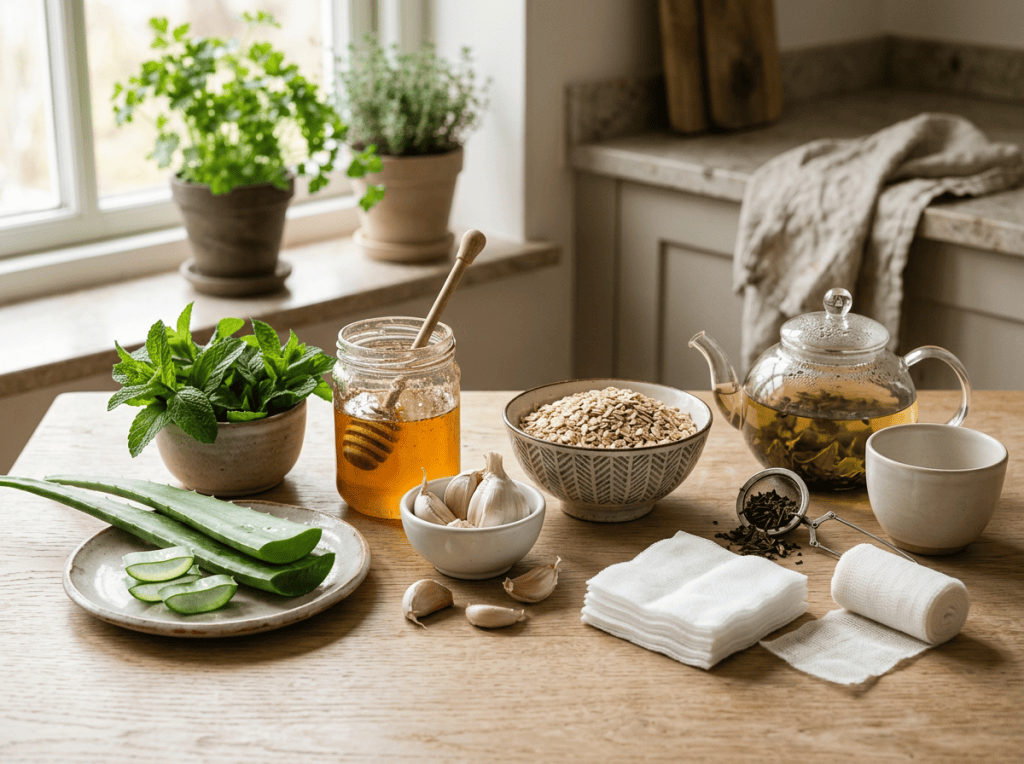


Have you wondered whether your kitchen can ease minor aches and discomforts? Next time you have an ache or pain, forget about a costly trip to the drugstore. Test-drive some of your grandmother’s remedies instead; it’ll save money and be gentler on your body and the env.
This guide presents 13 Natural Remedies For Common Infections & Pains for everyday issues. It explores practical home solutions for cuts, burns, and headaches. These remedies may soothe symptoms, but they cannot replace professional medical care when needed.
Natural does not always mean safe, so check for allergies and medication interactions. Keep an open mind about the possibilities in these simple ingredients. They may offer relief without the side effects of over-the-counter medications; try these natural remedies for pain.

Key Takeaways
- Home remedies can be effective for minor discomforts.
- Natural solutions are often more affordable than store-bought medications.
- Always check for allergies and medication interactions before trying new remedies.
- These remedies should complement, not replace, professional medical care.
- Common ingredients like honey and ginger have potential health benefits.
Why More Americans Are Choosing Natural Remedies
More Americans now use natural remedies for common ailments, including pain. They want options that seem safer, easier to find, and less costly. The trend also reflects family traditions and trust.
- Cost Savings: Many natural remedies are inexpensive and can be made at home, making them budget-friendly options.
- Convenience: Ingredients for natural remedies, such as herbs and spices, are often readily available in local grocery stores.
- Familiarity: Many of these remedies, like grandmother’s remedies, have been passed down through generations, providing a sense of comfort and trust.
- Gentler on the Body: Plant-based supplements and herbal teas for a cold are often perceived as less harsh than pharmaceutical options.
Family traditions and modern research also fuel interest in these remedies. Studies now examine how well certain ingredients work. For example, compounds like curcumin in turmeric and allicin in garlic have shown promise in scientific settings.
These compounds may offer benefits such as:
- Anti-inflammatory properties: Curcumin is known for its ability to reduce inflammation.
- Antimicrobial effects: Honey and garlic may exhibit properties that help fight infections.
- Pain relief: Capsaicin, found in chili peppers, may influence pain signaling pathways.
These remedies, including essential oils to dull a headache, may soothe minor symptoms, but they do not replace medical treatment. Feeling better does not always remove the cause of pain or infection. View them as limited self-care options for minor symptoms, not as substitutes for professional medical advice.

Important Safety Tips Before Trying Home Remedies
Before trying home remedies backed by science, learn the basic safety rules. Natural substances like honey, garlic, and ginger may help, but they also carry risks. Natural antibiotics may work less well than synthetic drugs and may not fully clear an infection.
These remedies may cause side effects and interact with other medications. Garlic and ginger can affect blood thinners and diabetes medications. Therefore, talk with your doctor before consuming these foods regularly.
Read product labels carefully. Dilute essential oils properly and test on a small patch of skin to prevent irritation. Putting unsterile substances on deep wounds or serious burns can cause infections.
Never give honey to infants under one year old because it can cause botulism. Natural remedies should never delay seeking medical care for serious symptoms, including spreading redness, pus, high fever, or difficulty breathing. If pregnant, breastfeeding, elderly, or managing a chronic condition, consult your healthcare provider or pharmacist before using home remedies.

13 Natural Remedies For Common Infections & Pains to Try at Home
Try these natural remedies for pain and common infections and pains at home. These remedies are grouped by the discomfort they may address. This guide can help you choose an option while keeping safety in mind.
Remember that each person may respond differently. Use caution, especially with treatments applied to the skin. Stop immediately if you notice burning, swelling, or worsening symptoms.
Skin Care Remedies
- Cayenne Pepper: This spice may stop bleeding quickly when applied to minor cuts. Use it carefully, and clean the area first.
- Aloe Vera: Aloe vera soothes minor burns and may promote healing and comfort.
- Green Tea: Green tea contains antioxidants and may relieve rashes and allergic reactions when applied to the skin.
- Oatmeal: Oatmeal baths can soothe acne and sensitive skin while relieving irritation.
- Salt, Garlic, or Vinegar: These ingredients may treat athlete’s foot when used in a foot soak.
Pain and Headache Support
- Clove Oil: This oil may relieve toothache pain when applied directly to the affected area.
- Garlic Oil: A natural remedy for ear infections. Use it carefully for its antimicrobial effects.
- Arnica Cream: Arnica cream may soothe sore muscles and bruises.
- Peppermint: As an essential oil, peppermint has a cooling effect and may ease headaches and migraines.
Digestive and Throat Comfort
- Ginger: Ginger may ease gas and digestive discomfort as tea or in food.
- Apple Cider Vinegar: Apple cider vinegar is a common heartburn remedy that may balance stomach acidity.
- Olive Oil: Olive oil, combined with fiber, may promote regularity and relieve constipation.
- Salt Water Gargle: Salt water gargles can soothe a sore throat, especially with honey and lemon.

These remedies may help you ease discomfort naturally and promote faster healing at home. Talk with a healthcare professional if you have concerns or symptoms continue.
Natural Remedies for Cuts, Burns, and Skin Conditions
Natural remedies may soothe your skin and help manage minor cuts, burns, and other conditions. Use them carefully, especially for cuts, burns, and other skin conditions.
1. Cayenne Pepper to Stop Bleeding Fast
Cayenne pepper on a cut may help stop the bleeding and relieve the pain. This spice has natural coagulant properties that may help blood clot.
Do not use cayenne pepper for significant bleeding. For heavy or spurting wounds, seek immediate medical attention.
2. Aloe Vera, Potato, or Honey for Minor Burns
For minor burns, cool the area under running water first. After cooling, you can apply aloe vera gel to the burn, slice a potato, or use honey with its antibacterial properties.
- Aloe Vera Gel: Known for its soothing properties, aloe vera can help reduce pain and promote healing.
- Sliced Potato: This natural remedy may help relieve the burn by cooling it and reducing inflammation.
- Honey: With its antibacterial properties, honey can help prevent infection, but ensure you use medical-grade honey for best results.
3. Green Tea for Rashes and Allergy Relief
Green tea may soothe rashes and allergies, not just serve as a drink. Its compounds have antihistamine properties that may ease discomfort. Brew a cup, let it cool, and gently apply it to the affected area.
4. Oatmeal for Acne and Sensitive Skin
Oatmeal is a gentle exfoliant for acne and sensitive skin. When you wash your face with oatmeal, it draws out oil and impurities without irritating sensitive skin. Use colloidal oatmeal in a bath or facial mask to calm inflammation and reduce acne.
5. Salt, Garlic, or Vinegar for Athlete’s Foot
Athlete’s foot is a common foot fungus that can feel uncomfortable. To treat it, you can soak your feet in salty water, use garlic juice, or apply diluted white or apple cider vinegar:
- Soak your feet in salty water: This can help dry out the infection.
- Apply garlic juice: Garlic has antifungal properties that may combat the fungus.
- Use diluted vinegar: White or apple cider vinegar can help restore skin pH and fight the infection.
These remedies may help, but keep your feet dry and change socks regularly. If symptoms persist, consult a healthcare professional.

Natural Remedies for Pain, Infections, and Headaches
Natural remedies may ease discomfort from toothache, ear infections, sore muscles, and headaches. They use common ingredients found in kitchens or local stores. Use them carefully, and understand their limits.
Clove Oil and Garlic for Toothache Pain
Toothaches can cause severe discomfort, including shooting pain. Clove oil has strong pain-relieving effects, and applying diluted clove oil to your tooth and gums may briefly give you relief. A smashed piece of garlic may help because of its antibacterial properties, which may reduce swelling and pain.
These remedies cannot replace professional dental care. Decay, cracked teeth, and gum disease need a dentist’s evaluation. If one is unavailable, properly dilute clove oil to prevent burning the gums.
Garlic Oil or White Vinegar for Ear Infections
People often suggest garlic oil or white vinegar for mild ear infections in the early stages. Never put liquid into the ear canal unless a clinician confirms the eardrum is intact. This step helps prevent further problems.
Ear pain may come from infection, wax buildup, or referred dental pain. Ear candles are dangerous and ineffective, so avoid them.
Arnica Cream for Sore Muscles and Bruises
For sore muscles and bruises, consider using arnica cream. It may offer instant relief and no aches the next day. Evidence for its benefits is mixed, so apply it only to unbroken skin.
Follow the product directions carefully. Never swallow arnica or apply it to cuts.
Peppermint, Lavender, or Feverfew for Headaches and Migraines
Headache and migraine pain can be severe. Aromatherapy with peppermint oil or lavender oil may help some people relax. Apply diluted oil to your temples and the base of your neck.
Tea from fresh-cut lemon or lime may feel refreshing and ease some symptoms.
Feverfew may help some people, but discuss it with a clinician first. It may interact with some medicines and may not suit everyone.
Watch for urgent signs, including a sudden, severe headache, neurological changes, a stiff neck, fever, or a head injury. Also watch for vision loss or a painful, red, swollen ear. Seek medical attention promptly in these cases.

Natural Remedies for Digestive Discomfort and Sore Throats
Natural remedies may relieve common digestive issues and sore throats. They can work, but use them with care. Have persistent symptoms checked by a healthcare professional.
10. Ginger, Peppermint, and Anise for Flatulence
Gas and flatulence can feel uncomfortable, but certain digestive spices may help. Ginger, peppermint, and anise can be made into tea, or you can incorporate them into your food. Coriander and dill may ease gas, but peppermint can worsen reflux for some people.
11. Apple Cider Vinegar for Heartburn Relief
Many people use apple cider vinegar for heartburn relief. A spoonful or two mixed with water might help, but evidence remains limited. It can irritate the esophagus and worsen symptoms from reflux or ulcers, so consider it carefully.
12. Olive Oil, Epsom Salt, and Fiber for Constipation
For constipation, drink more water, eat fruit and salads, and try orange or diluted lemon juice. Gradually increase fiber from whole grains and legumes to support regular bowel movements. Include olive oil and healthy fats carefully; use Epsom salt only with medical guidance, and avoid calorie restriction.
13. Salt Water Gargle and Honey-Lemon Tea for Sore Throat
For a sore throat, gargling with warm salt water may provide relief for older children and adults. Honey-lemon tea can soothe sore scratchy throats from a cold or flu, especially for people over one year old. Seek medical care for trouble breathing, trouble swallowing, or severe pain.

How to Get the Best Results From Natural Remedies
To get the best results from natural remedies, take a careful, informed approach. Start with one remedy at a time to spot adverse reactions. Be persistent, consistent, and diligent when tracking your response.
It’s important to use home remedies correctly by following the product label. More is not always better, especially with essential oils, turmeric, ginger, or herbal supplements.
Consistency matters. Stick with it until at least a week after you think the symptoms are gone. This persistence can help show whether the remedy works.
However, remember that natural remedies may not always be safe and effective for you. Monitor your symptoms closely. If pain, swelling, or fever worsens, stop self-treating and consult a healthcare professional.
When using topical products, keep them clean. Use clean utensils and containers, and wash your hands before applying any remedy.
Do not share these products because sharing can spread contamination. Store your preparations safely, away from children and pets.
Add low-risk, supportive habits to your routine. Stay hydrated, get enough rest, and eat a balanced diet to support your natural remedies.
If you have digestive issues, make sure you consume enough dietary fiber.
Remember that supplement quality can vary. The FDA does not preapprove essential oils for purity or effectiveness as it does prescription medications.

When to See a Doctor Instead of Self-Treating
Know when you need a doctor’s visit instead of home remedies. Natural treatments may help minor issues, but serious infections need prompt medical attention.
Home remedies may not clear infections and may delay effective care. If symptoms are severe, lasting, or worsening, speak with a doctor about prescription treatment. These signs show when you need professional help:
- Trouble breathing or chest pain
- Confusion or fainting
- Severe allergic reactions or uncontrolled bleeding
- Major burns or severe dehydration
- Sudden neurological symptoms
If redness, warmth, swelling, or pus spreads around a wound, seek medically necessary care. Other symptoms also call for a medical visit:
- High fever or severe pain
- A suspected abscess or an infection in someone with diabetes
- Dental pain accompanied by facial swelling or difficulty swallowing
- Ear drainage, hearing loss, or severe ear pain
In some cases, surgery may be necessary for infected tissue or abscesses. Traditional antibiotics are not needed for every illness, but they can be an effective option for bacterial infections. Delaying needed treatment can cause complications.
Tell your healthcare provider about any natural products you have used. This information helps them choose the best prescription treatment for your health.

Building Your Own Natural First-Aid Kit at Home
A well-stocked natural first-aid kit can help you avoid a costly trip to the drugstore. A few common ingredients can help you save money and handle minor health issues. It can be gentler on your body while helping you manage everyday problems.
Start by gathering these essential supplies:
- Aloe vera gel for soothing burns and skin irritations.
- Colloidal oatmeal for rashes and itchy skin.
- Honey (for individuals over one year old) to help with coughs and minor wounds.
- Ginger for digestive issues, such as nausea.
- Peppermint tea to relieve headaches and digestive discomfort.
- A clean supply of salt water for gargling to soothe sore throats.
- Clean bandages and sterile gauze for wound care.
- Adhesive bandages in various sizes for minor cuts.
- Digital thermometer for monitoring fevers.
- Cool compresses to reduce swelling or pain.
Store every item safely when you assemble your kit. Label essential oils, keep them out of reach of children and pets, and use them only as directed and properly diluted. Also include a list of medications and allergies, emergency contacts, and basic wound-care instructions.
Check expiration dates often, and replace contaminated or opened products. This kit supports symptoms and first aid, not deep wounds, serious burns, severe infections, or unexplained persistent symptoms.

Conclusion
Exploring natural remedies for common infections and pain can enhance your wellness routine. These remedies may ease discomfort and support faster healing for minor issues. Honey, garlic, and ginger show promise in some studies, but natural antibiotics may help fight infections only in some cases. No single natural antibiotic works for every infection.
Before trying any home remedy, talk with a healthcare professional, especially if you take medicines or manage a chronic condition. Understanding risks and side effects of natural treatments helps you use them safely. Never give honey to infants under one year, and do not place unapproved substances in the ear.
For minor burns, keep the area cool and clean. Hydration is vital, as are gentle foods or teas that support recovery. Natural remedies may provide comfort, but they do not replace professional dental care, antifungal treatments, or antibiotics when needed.
Prompt professional care can prevent minor infections, injuries, or unexplained pain from becoming more serious. Use natural remedies wisely and responsibly to support your health while protecting safety and effectiveness.




Leave a comment