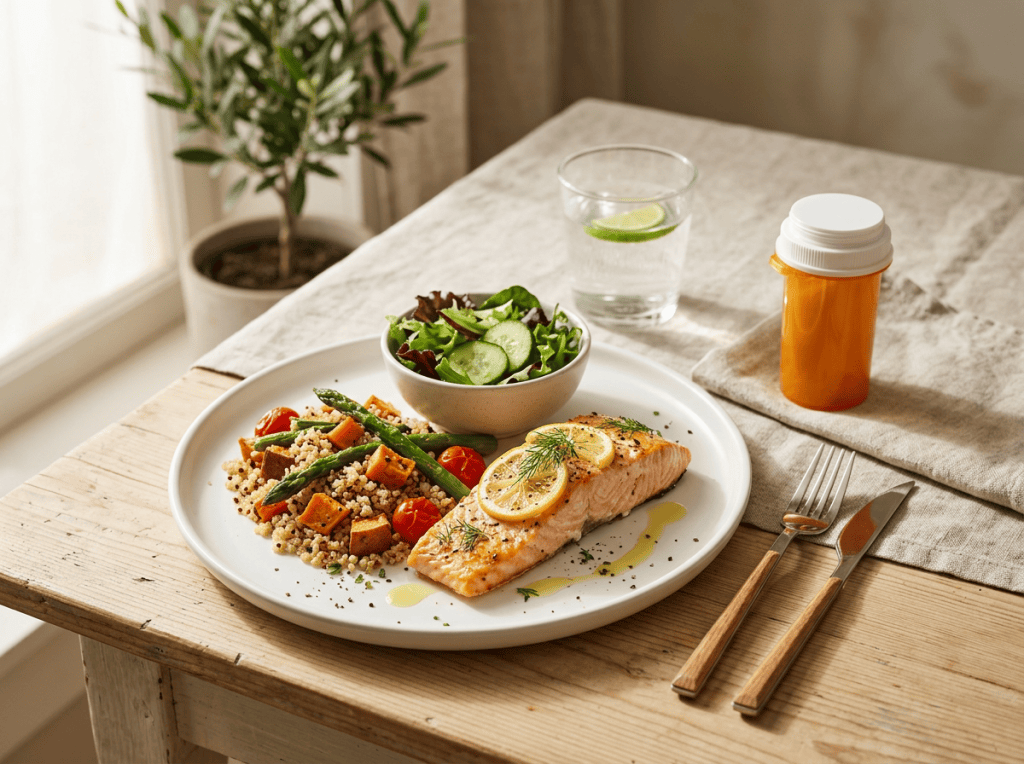


If you’re taking a statin to lower your cholesterol, you may wonder if it gives you more freedom at dinner.
Many people ask this question, but the answer may surprise you.
Statins lower LDL cholesterol and cardiovascular risk, but they do not replace healthy eating habits.
Your food choices affect cholesterol, body weight, blood pressure, blood sugar, and overall metabolic health.
An occasional treat can fit into a balanced diet.
However, eating bacon, fried foods, cheeseburgers, sugary drinks, and pastries can often harm your health.
Choose a heart-healthy pattern with vegetables, fruits, whole grains, beans, nuts, fish, and healthy oils.
Limit saturated fats and ultra-processed foods.
This article covers statin benefits, heart-healthy foods, exercise, and following medication instructions.
Pairing your statin with healthy habits supports long-term heart health.

Key Takeaways
- Statins lower LDL cholesterol but don’t replace healthy eating.
- Food choices impact overall metabolic health and cardiovascular risk.
- Occasional indulgences are acceptable in a balanced diet.
- A heart-healthy diet includes fruits, vegetables, and whole grains.
- Limit saturated fats and ultra-processed foods for better health.
If You Take a Statin, Can You Eat Whatever You Want?
If a statin is keeping your cholesterol in check, why not eat whatever you want? The answer is more complex than it seems. Statins effectively lower LDL cholesterol, but they do not eliminate the risks associated with poor food choices.
Eating too much saturated fat, refined carbohydrates, added sugars, and ultra-processed foods can undermine your health goals. A statin cannot prevent problems from extra calories, weight gain, or insulin resistance.
Statins reduce cholesterol production in the liver. Healthy eating improves cholesterol, blood pressure, blood sugar, and inflammation. Relying only on medicine does not make poor food choices safe.
Focus on the foods you eat most often. Consider these dietary tips:
- Replace heavily processed foods with minimally processed options.
- Use healthier fats in reasonable portions.
- Enjoy your favorite foods, but in moderation.
Dietary changes can greatly improve your health. Do not stop or change your statin without medical guidance, even when cholesterol levels improve.

Statins 101: What They Are and How They Work
This Statins 101 guide helps people understand cholesterol treatment. Statins are a class of prescription medications that lower LDL cholesterol, often called “bad” cholesterol. Lowering LDL can greatly reduce the risk of heart attacks and strokes.
Common examples include atorvastatin (brand name Lipitor), rosuvastatin (brand name Crestor), and simvastatin (brand name Zocor). These medicines block the liver enzyme HMG-CoA reductase, which helps produce cholesterol. The right statin and dose depend on cholesterol levels, cardiovascular history, and overall health.
Common Statin Medications Prescribed in the United States
In the United States, atorvastatin, rosuvastatin, and simvastatin are commonly prescribed and lower LDL cholesterol to varying degrees. For instance, atorvastatin can reduce LDL levels by up to 60%, depending on the dosage. Consult your healthcare provider to choose the best option for your needs.
How Statins Lower LDL Cholesterol
Statins lower LDL cholesterol by blocking the HMG-CoA reductase enzyme. This block reduces cholesterol production in the liver and helps it clear more LDL particles. Together, these actions significantly lower LDL levels.
Statins can also lower triglycerides and modestly raise HDL cholesterol, often called “good” cholesterol.
Statins work well, but they are not a cure-all. Take them consistently as prescribed. Discuss side effects or missed doses with your physician or pharmacist.

Why Lowering LDL Cholesterol Matters
Lowering LDL cholesterol matters because it helps prevent heart disease. When too much LDL circulates in your bloodstream, it could contribute to plaque buildup inside artery walls. This process, called atherosclerosis, can narrow arteries and reduce their flexibility.
LDL particles carry cholesterol through your bloodstream and can enter artery walls, especially where inflammation or damage already exists. Over time, cholesterol and other materials build up and form plaque. Plaque can rupture and cause blood clots that block blood flow, possibly causing a heart attack or ischemic stroke.
LDL is a major target in cardiovascular prevention, but it is only one part of your overall risk. Statins lower LDL in your blood and reduce the chance of plaque-related complications. Discuss the results with a healthcare professional because individual targets depend on your history and risk level, not on a single number alone.

Are Statins a Loophole to Eating Fast Food?
Some people think statins let them eat fast food without consequences. Many ask, have people discovered a junk food loophole? The answer to “are statins a loophole to eating fast food?” is “well, yes and no.”
Statins effectively lower LDL cholesterol, but they do not undo the harm caused by a poor diet. They may give you some flexibility, but they are not permission to eat unhealthy foods. Fast food often contains saturated fats, sodium, refined carbohydrates, and added sugars.
Eating these foods often can cause weight gain, high blood pressure, and a higher diabetes risk. These risks remain even when statins control your LDL levels.
Some people may think statins give them permission to eat more fast food. This belief can reduce attention to diet and physical activity.
Statins help manage cholesterol, but they do not fix every health problem. You need not feel guilty about an occasional meal out; instead, use it as a chance to choose better foods.
When you choose fast food, consider these practical improvements:
- Select grilled options instead of fried.
- Add vegetables to your meal.
- Opt for smaller portion sizes.
- Limit sugary drinks.
- Avoid processed-meat toppings.
In summary, statins may offer some flexibility, but they are not a loophole for unrestricted eating. Balance medication with a healthy diet to protect your heart health.

What Statins Can and Cannot Do for Heart Health
Statins can lower cholesterol effectively, but they do not address all aspects of heart disease. Knowing their role helps you manage your heart health.
Effectively Lowering LDL Cholesterol
Statins are a powerful tool for lowering the risk of heart disease. While a statin can significantly lower one important risk factor—LDL cholesterol—it does not address all the factors that contribute to heart disease. They reduce liver cholesterol production, which lowers LDL levels significantly.
They are often prescribed for people with established cardiovascular disease, very high LDL, or diabetes in certain age groups. Doctors may also prescribe them for people with elevated predicted cardiovascular risk.
Statin benefits depend on taking the medicine as directed and attending regular follow-up appointments; missing doses can reduce its effect. Remember, “High cholesterol is often symptomless,” so don’t stop your medication just because you feel fine. Always consult your healthcare provider if you experience any muscle symptoms, digestive concerns, or other side effects.
Other Risk Factors Statins Don’t Address
Despite their effectiveness, statins do not independently correct several critical factors that contribute to heart disease. They cannot fix issues such as excess calorie intake, abdominal weight gain, high sodium intake, or physical inactivity. They also do not address smoking, poor sleep, high blood pressure, or elevated blood sugar levels.
Statins may modestly increase HDL cholesterol, but they do not significantly affect triglyceride levels. Healthy eating and regular exercise remain essential for managing these parts of heart health. Lifestyle choices play a key role in your overall well-being.

The Limits of Statins: Why Diet Still Matters
Statins can lower cholesterol, but they cannot replace a balanced diet. While we might all wish statins could excuse greasy, fried foods we want to eat, that reality is fictional. Diet remains vital for cardiovascular health.
A diet high in fried foods, processed meats, and refined carbohydrates can cause weight gain and insulin resistance. These issues may raise your risk of high triglycerides, high blood pressure, and chronic inflammation. Even when statins lower LDL cholesterol, these choices can still harm heart health.
A diet rich in soluble fiber, vegetables, fruits, beans, whole grains, nuts, and fish can support your cardiovascular system. Soluble fiber binds cholesterol in your digestive tract and helps remove it from your body. You can reduce saturated and trans fats while choosing healthy fats from olive oil, nuts, and fatty fish.
Exercise also supports a heart-healthy lifestyle. The U.S. Physical Activity Guidelines recommend at least 150 minutes of moderate-to-vigorous activity each week. They also recommend strength training on two or more days.
Gradual, lasting changes to your diet and activity level can improve your heart health.
How Statins and a Heart-Healthy Diet Work Together
When statins and diet work together, they support cardiovascular health. Statins lower LDL cholesterol, while a nutritious diet can strengthen this effect and improve other health factors. Together, they offer a broad plan to reduce cardiovascular risk.
The power of the combined approach lies in its support for several aspects of heart health. Statins lower LDL cholesterol, while a heart-healthy diet may improve triglycerides, blood pressure, blood sugar, body weight, and inflammation. This teamwork may produce better results than medicine alone.
Exercise can strengthen these benefits. Regular activity improves cardiovascular fitness, insulin sensitivity, and weight control, which help maintain healthy lipid levels.
Flexible eating plans, including Mediterranean and American Heart Association styles, feature many minimally processed foods. These include:
- Vegetables and fruits
- Whole grains and legumes
- Nuts and healthy fats
- Lean proteins and low-fat dairy
- Fish and seafood
Make these changes practical by changing one meal at a time. For instance, start with oatmeal topped with fruit and nuts. For lunch, enjoy a bean-and-vegetable bowl; for dinner, eat fish with whole grains and vegetables.
Healthy fats offer benefits, but they still contain calories. Watch portions to keep your diet balanced. Statins can reduce the effects of high LDL, but they cannot make an unhealthy diet harmless.
Using medication and making lifestyle changes can strengthen their effects. This combined strategy protects your heart more fully than either approach alone. The bigger goal is to make the foods you eat most often do the heavy lifting for your health.
Building a Heart-Healthy Plate
A nutritious plate can improve your heart health. Try a Mediterranean-inspired pattern built around whole, lightly processed foods, including vegetables, fruit, nuts, and olive oil.
The Mediterranean-Inspired Approach
This approach centers on many plant foods. You do not need to become vegetarian or vegan. Make vegetables, fruit, and whole grains the stars of your plate, including oats, beans, and lentils.
Key Foods to Include
- Fill half your plate with a colorful array of vegetables and fruits.
- Choose whole grains or starchy vegetables for a substantial portion, like oats or beans.
- Add lean proteins such as fish, poultry, or lentils.
- Incorporate healthy fats through small portions of nuts, seeds, or olive oil.
Foods to Cut Back On
As you build your heart-healthy plate, consider limiting these foods:
- Processed meats and fried foods
- High-fat dairy products and pastries
- Refined grains and sugary beverages
“Cut back” does not mean “never eat” these foods. For example, choose olive oil instead of butter, or enjoy baked fish rather than fried food. Be mindful of grapefruit or grapefruit juice; they may interact with some statins. Always consult your prescriber or pharmacist about your specific medication.
Foods to Embrace While Taking a Statin
Eating well while taking statins can support heart health. Certain foods may help manage cholesterol and improve how well your medication works. Consider these food groups:
Whole Grains, Beans, and Lentils
Whole grains, beans, and lentils are excellent choices. Oats and barley provide soluble fiber, which binds cholesterol and helps remove it from your body. Try oatmeal, lentil soup, bean chili, barley bowls, and whole-grain sides for varied meals.
Vegetables, Fruits, and Nuts
Eat many colorful vegetables and fruits for heart health. Choose leafy greens, broccoli, peppers, apples, pears, and citrus fruits. Walnuts and almonds offer unsaturated fats, fiber, and protein; eat small portions because nuts are high in calories.
Olive Oil and Fatty Fish
Use extra-virgin olive oil instead of butter or solid fats. It is a healthy fat that supports heart health. Salmon, tuna, sardines, and mackerel provide omega-3 fatty acids, complement statin therapy, but do not replace prescribed medications.
Lean poultry, low-fat dairy, and occasional lean meats can fit a balanced diet. You do not need to remove all animal products to protect heart health. Focus on cutting back on processed meats, fried foods, and refined carbohydrates like white bread, white rice, and pastries.
Foods to Limit or Avoid on a Statin
Knowing which foods to limit on statins supports heart health. Statins reduce risk significantly, but they don’t eliminate it because lifestyle addresses the rest of the picture. Diet can help statins lower LDL cholesterol and work more effectively.
Processed Meats
Processed meats include bacon, sausage, hot dogs, salami, ham, and deli meats. They often contain high levels of saturated fat, sodium, and preservatives. Frequent consumption links to poorer heart health, so limiting these foods may help.
Fried Foods
Fried foods often contain many calories and unhealthy fats. Risks increase when solid fats or oils are reheated repeatedly. Choose baked, grilled, roasted, or steamed foods, and watch portion sizes.
Refined Carbohydrates
Limit refined carbohydrates, including white bread, white rice, pastries, chips, candy, sweetened cereals, and sugary beverages. These foods often lack fiber and can make triglycerides, blood sugar, and weight harder to manage. Saturated fat concerns many people more than dietary cholesterol, but personal advice may differ.
Be cautious with grapefruit and grapefruit juice. They can raise blood levels of certain statins, so ask your pharmacist or physician about medication-specific guidance. This explains ultimately why a balanced diet and a statin work best together.
Statins Reduce Risk Significantly, But Don’t Eliminate It
Statins can greatly lower your risk of heart disease, but they do not remove it. These medicines lower LDL cholesterol, but they address only one part of heart health. Heart disease can also involve blood pressure, smoking, diabetes, and family history.
For the best results, exercise often, keep a healthy weight, and manage other medical conditions. Eat a balanced diet, because one meal cannot decide your heart health. One prescription cannot undo years of unhealthy habits, so lasting changes are vital.
High cholesterol often causes no symptoms, so take your medicine as prescribed. Attend follow-up visits and report side effects to your healthcare provider; do not stop medicine on your own. Ask your healthcare team how often to check cholesterol and which LDL goal fits your personal risk level.
Statins reduce heart attack and stroke risk; a protective plan combines evidence-based medicine, healthy food, regular movement, and avoiding tobacco.
Conclusion
Taking a statin does not let you eat any food without limits. Statins lower LDL cholesterol and reduce cardiovascular risk, but they work best when combined with a heart-healthy lifestyle. Eat fiber-rich foods, including vegetables, fruits, whole grains, beans, and lentils, every day.
Choose unsaturated fats from olive oil and fatty fish to support heart health. Limit saturated fats and avoid ultra-processed foods, which can counteract your medication’s benefits. Follow this statin diet guidance: enjoy occasional treats, but fill most of your plate with nutritious foods.
Taking your prescribed medication as directed is crucial. Discuss side effects, missed doses, or concerns about grapefruit consumption with your healthcare provider. Statins provide vital cardiovascular protection, but everyday choices also affect overall heart health.



Leave a Reply