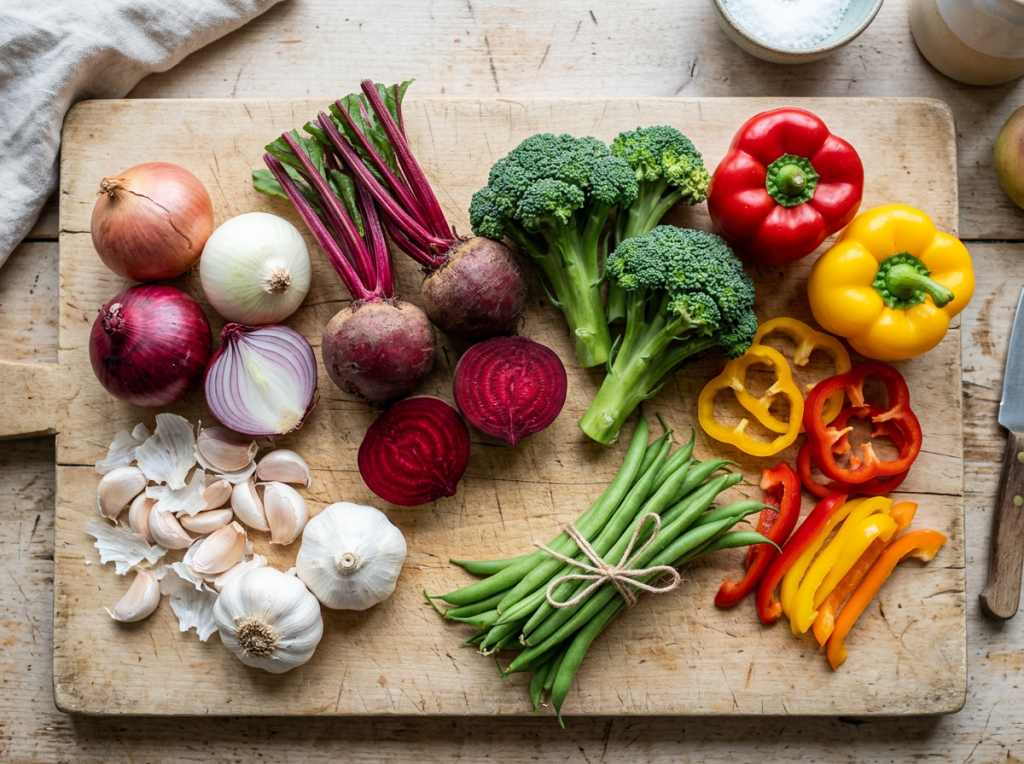


Did you know that nearly 37 million adults in the United States have chronic kidney disease? This is a big number that shows how important it is to keep our kidneys healthy. Eating the right foods can help a lot. Certain vegetables are packed with nutrients that support kidney health.
These vegetables can help ease the load on our kidneys. They are key for anyone wanting to boost their kidney function. So, let’s look at five vegetables that are great for your kidneys.
Eating more of these can make your meals tastier and healthier. You’ll learn how these veggies can positively affect your kidneys. It’s all about making your diet better for your kidneys.

Key Takeaways
- Kidney health is crucial, with millions affected by kidney disease.
- Diet plays a vital role in supporting kidney function.
- Certain vegetables can ease strain on the kidneys.
- A plant-forward diet enhances overall well-being.
- Incorporating more vegetables can improve kidney health.
Benefits of a Plant-Forward Diet for Kidney Health
Eating more plant-based foods is good for your kidneys. These foods are full of nutrients and antioxidants. They help lower inflammation and keep your kidneys working well.
Adding more veggies, fruits, and whole grains to your meals is healthy. It can improve your overall health.
How Antioxidants Reduce Inflammation and Support Kidney Function
Antioxidants are key in protecting your kidneys. They fight off harmful free radicals. Eating a diet rich in antioxidants can:
- Reduce body inflammation
- Improve kidney function
- Lower the risk of chronic diseases
This diet helps your kidneys stay healthy. It also boosts your overall well-being.
Importance of Managing Sodium, Potassium, and Hydration Levels
It’s also important to manage sodium, potassium, and hydration. Here’s how:
- Limit sodium by avoiding processed foods.
- Choose low-potassium fruits and veggies to help monitor potassium intake.
- Drink plenty of water to stay hydrated.
By following these tips, you can better protect your kidneys. Keeping these minerals and fluids balanced is crucial for kidney health.
Beets: A Nutrient-Packed Vegetable for Kidney Support
Beets are more than just a colorful food. They are full of nutrients that help your kidneys, like managing blood pressure and reducing inflammation. Learning how beets help can make you want to eat them more often.
Role in Blood Pressure Management and Inflammation Reduction
Beets have nitrates that turn into nitric oxide in your body. This helps blood vessels relax, improving blood flow and lowering blood pressure. The antioxidants in beets also fight inflammation, which is key to kidney health. Eating beets can be a simple way to support your kidneys.
Tips for Adding Beets to Your Diet
It’s easy and tasty to add beets to your meals. Here are some tips:
- Roast them: Roasting brings out their natural sweetness.
- Juice them: Mix with other fruits and veggies for a refreshing drink.
- Add to salads: Slice or grate raw beets for a crunchy texture.
- Use in smoothies: Blend with yogurt and berries for a nutritious snack.
With these tips, you can enjoy the benefits of beets while supporting your kidney health. Eating beets regularly can help manage blood pressure and reduce inflammation. They are a great addition to your diet.
Cruciferous Vegetables for Optimal Kidney Health
Cruciferous veggies like broccoli, cauliflower, and cabbage are great for your kidneys. They’re full of nutrients and compounds that protect your cells and boost kidney function.
These veggies are known for their ability to fight inflammation. They contain antioxidants that neutralize harmful free radicals. This is key to keeping your kidneys healthy and preventing damage.
Here are some key reasons to include cruciferous vegetables in your diet:
- Rich in vitamins and minerals
- Low in potassium, making them kidney-friendly
- Affordable and easy to find
- Support cardiovascular health
It’s easy to add these veggies to your meals. You can steam, roast, or toss them in salads. Try to include them in your meals each week to enjoy their health perks.

| Vegetable | Key Nutrients | Health Benefits |
|---|---|---|
| Broccoli | Vitamins C, K, and fiber | Supports immune function and reduces inflammation |
| Cauliflower | Vitamins B6, C, and folate | Helps with digestion and may lower blood pressure |
| Cabbage | Vitamins K, C, and fiber | Promotes gut health and may reduce cancer risk |
Adding cruciferous veggies to your diet is a smart move for kidney health. These foods are not only good for you but also tasty and versatile.
Red Bell Peppers: A Low-Potassium Powerhouse
Red bell peppers are great for your diet, especially if you’re focusing on kidney health. They are packed with vitamins and have low minerals. They are rich in vitamins C and A but low in potassium and phosphorus. This makes them perfect for keeping your kidneys working well. potassium and phosphorus. This makes them perfect for keeping your kidneys working well.
Vitamins C and A as Essential Nutrients for Kidney Function
Vitamins C and A are key to kidney health. Here’s why:
- Vitamin C: It acts as an antioxidant, protecting your kidneys.
- Vitamin A: It supports overall health and may reduce inflammation.
Adding red bell peppers to your meals can give you these benefits. Plus, they keep your potassium intake low.
Various Ways to Incorporate Red Bell Peppers in Meals
It’s easy and tasty to add red bell peppers to your diet. Here are some ideas:
- Enjoy them raw with your favorite dips.
- Roast them for a sweet, smoky flavor.
- Add them to salads for a crunchy texture.
- Mix them into omelets for a colorful breakfast.
- Stuff them with grains and vegetables for a hearty meal.

Red bell peppers add color and flavor to any dish. They also help your kidneys. Try them in your meals today!
Garlic and Onions: Natural Anti-Inflammatory and Antioxidant Foods
Garlic and onions are more than just tasty in your food. They’re full of health benefits that help your kidneys. These veggies have compounds that fight inflammation and protect your kidneys.
Adding garlic and onions to your diet has many benefits:
- Reduce inflammation in the body
- Lower cholesterol levels
- Enhance immune function
- Support overall kidney health
It’s easy to use garlic and onions:
- Fresh: Add chopped garlic or onions to salads or dressings.
- Minced: Use in marinades or sauces for a flavor boost.
- Roasted: Roast vegetables for a delicious side dish.
- Powdered: Sprinkle on meats or vegetables for added taste.
Here’s a quick comparison of the benefits of garlic and onions:
| Food | Benefits |
|---|---|
| Garlic | Reduces blood pressure, lowers cholesterol, and fights infections |
| Onions | Boosts heart health, contains antioxidants, supports digestion |

By adding garlic and onions to your meals, you not only enhance flavor but also support your kidney health. Embrace these natural foods for their powerful benefits.
Green Beans: Kidney-Friendly and Low in Potassium
Green beans are a great choice for kidney health. They are tasty and good for you because they are low in potassium and high in water. This makes them perfect for a kidney-friendly diet. Let’s look at why green beans are good for your meals.
Benefits of Low Potassium and Water Content in Kidney Diets
Keeping an eye on potassium is key to kidney health. Green beans are low in potassium and water. This helps your kidneys less while still giving you important nutrients. Some benefits include:
- Low potassium levels, which reduce the risk of complications.
- Low water content, which can help with fluid management.
- Rich in vitamins and minerals that support overall health.
Simple Preparation Suggestions for Green Beans
Adding green beans to your diet is simple. Here are some easy ways to prepare them:
- Steaming: This method preserves nutrients and enhances flavor.
- Boiling: Quick and easy, great for salads.
- Sautéing: Delicious with spices and other veggies.

Green beans are a versatile and nutritious choice for your meals. Their kidney-friendly qualities mean you can enjoy them without guilt, helping your health.
5 vegetables to eat more of for better kidney health: A Summary
Eating more vegetables can really help your kidneys. These veggies are full of nutrients that support kidney health. Here are five important vegetables to add to your meals:
- Beets: They help manage blood pressure and reduce inflammation.
- Cruciferous Vegetables: Broccoli and cauliflower are great for detox and kidney function.
- Red Bell Peppers: They’re low in potassium but rich in vitamins C and A, good for the kidneys.
- Garlic and Onions: These are natural anti-inflammatory foods that also support kidney health.
- Green Beans: They’re low in potassium and high in water, making them good for the kidneys.
Eating a diet rich in plant foods and antioxidants can help reduce inflammation and support kidney health. It’s also important to manage sodium and potassium and stay hydrated to protect your kidneys. This balanced diet keeps your kidneys working well.

By focusing on these five vegetables, you can create a tasty, kidney-friendly diet. Try out different recipes and cooking methods to enjoy these nutritious foods.
Conclusion
Diabetes and high blood pressure can harm your kidneys. It’s important to protect them for your health. Eating more kidney-friendly vegetables is a good start.
Monitoring the sodium, potassium, and water intake is crucial. Adding beets, cruciferous veggies, and red bell peppers to your meals can help. Small diet changes can make a big difference.
Consult with healthcare experts to make your diet and lifestyle better for your kidneys. These steps not only help your kidneys but also boost your overall health. Begin now for a better future.



 trim down and shape up
Leave a comment