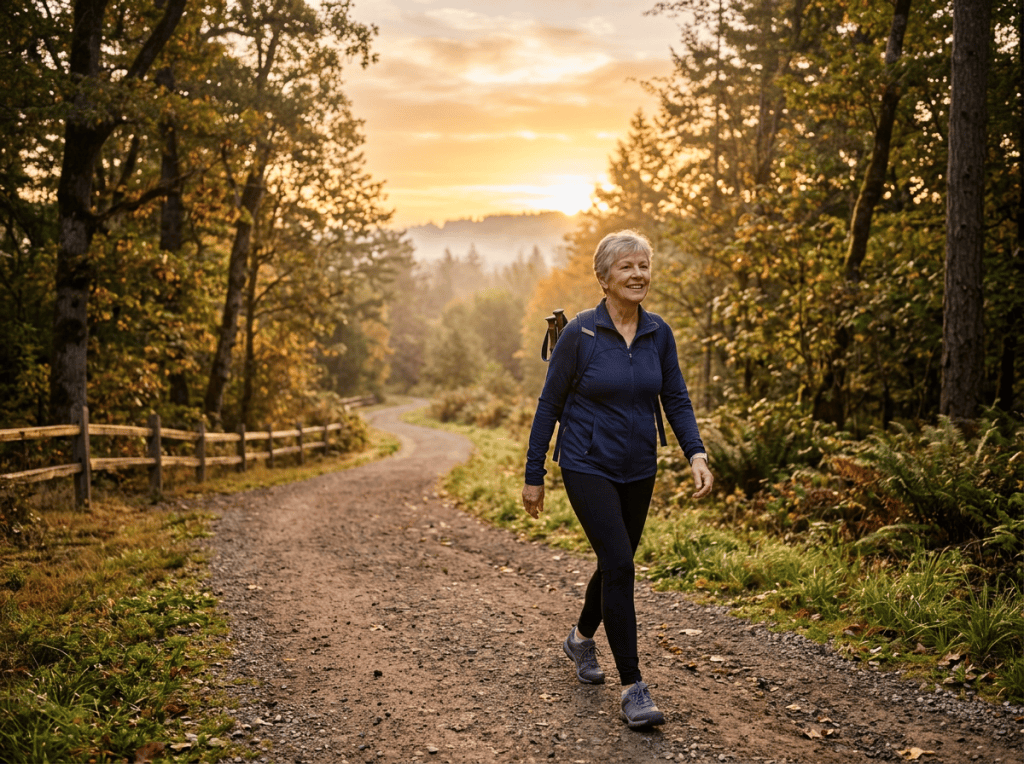


Did you know that lifestyle choices can affect up to 70% of your health and how long you live? While genes matter, small, daily habits after 60 can greatly improve your life. This article looks at 10 key habits for a fulfilling golden age.
By adopting these habits, you can live a vibrant and independent life. You’ll see how simple changes in your day can make a big impact. From what you eat to how active you are, every choice matters. Start these habits to improve your life and live longer.

Key Takeaways
- Small daily habits can lead to significant health improvements.
- Genetics are only part of the longevity equation.
- Physical activity is key for keeping your energy up.
- Eating right can boost your strength and independence.
- Staying connected with others is good for your mind.
- Getting enough sleep is vital for your health.
- Practicing mindfulness and managing stress is helpful.
Stay Physically Active to Boost Longevity and Energy
Being physically active is key to living longer and feeling more energetic. You can improve your health by adding daily movement to your life. Even small changes can make a big difference.
Engage in Daily Movement Beyond Formal Exercise
Doing daily activities keeps you agile. Here are some ways to stay active:
- Walk during errands or take the stairs.
- Do light household chores like gardening or cleaning.
- Stand while talking on the phone.
These actions help you stay active and keep your metabolism healthy.
Incorporate Balance and Strength Training Exercises
As you get older, it’s important to do daily stretching and balance exercises. They help keep your muscles strong and prevent falls. Try these:
- Single-leg stands to improve balance.
- Corner stands for stability.
- Yoga or tai chi to maintain flexibility and reduce stiffness.
Do balance exercises with daily tasks, like brushing your teeth. Aim for 150 minutes of moderate activity or 75 minutes of vigorous activity weekly. Always talk to your doctor before starting a new exercise plan.

Prioritize Balanced Nutrition for Strength and Independence
Nutrition is key to keeping your strength and independence as you age. A balanced diet helps you stay healthy and active. Eating a variety of colorful fruits, vegetables, whole grains, and lean proteins is beneficial.
This approach can reduce inflammation and lower the risk of chronic diseases. Heart disease and diabetes are examples of these conditions.
Adopt a Mediterranean or Plant-Forward Diet
The Mediterranean diet focuses on whole foods and healthy fats, like olive oil. It includes:
- Colorful fruits and vegetables
- Whole grains
- Lean proteins like fish and poultry
- Healthy fats from nuts and seeds
Eating this way can make you feel better and help you live longer. A plant-forward diet also focuses on plant-based foods but allows some animal products. Both diets support your health and vitality.
Focus on Protein Intake and Whole Foods
Protein is vital for muscle maintenance, which is important as you age. Aim for 20 to 30 grams of protein per meal. Good sources include:
- Chicken breast
- Greek yogurt
- Eggs
- Tofu
Reducing ultra-processed foods high in salt, sugar, and unhealthy fats is also beneficial. Focus on balanced nutrition to keep your strength and independence as you age.

Maintain Social Connections to Support Mental Health
Keeping in touch with friends and family is key for your mental health. Talking to loved ones regularly can make you feel better and less stressed. It also helps keep your mind sharp.
Being social keeps your brain active. Here are some ways to stay connected:
- Join community groups or clubs that align with your interests.
- Volunteer for local organizations to meet new people.
- Schedule regular gatherings with friends and family.
- Attend religious services or community events for social engagement.
Studies show that being social can make you live longer and think clearer. For instance, married people often live longer. Talking to family and friends boosts your immune system, making you healthier.

In short, building strong relationships is essential. It keeps your brain and emotions healthy and makes you feel part of a community. Try to stay connected with others, and you might live longer and happier.
Practice Daily Stretching and Balance Exercises to Reduce Fall Risk
Falls are a big risk for older adults, often causing serious injuries. To fight this, try daily stretching and balance exercises. These help make you more stable and less likely to fall. Adding stretching, yoga, or tai chi to your day keeps you flexible and balanced.
Simple Balance Practices like Single-Leg Stands
Simple exercises can boost your balance. Try these:
- Single-leg stands while holding onto a chair or countertop
- Corner stands to enhance stability
- Heel-to-toe walking for coordination
These exercises are simple and can be done at home. They strengthen your muscles and improve balance, lowering fall risk.
Yoga and Tai Chi for Flexibility and Stability
Yoga and tai chi add extra benefits. They:
- Enhance flexibility and strength
- Promote better posture
- Reduce stiffness in joints
Doing these activities improves your physical and mental health. Regular practice leads to a more active and independent life.

Walk Regularly and Integrate Movement Into Your Daily Routine
Walking is a simple yet effective way to stay active. It can greatly improve your heart health and overall well-being. You don’t need to set aside specific time for exercise. Just walk regularly, like during errands or leisure strolls, to meet the 150 minutes of moderate activity each week.

- Improves cardiovascular health
- Supports weight management
- Boosts mood and mental health
Engage in daily movement beyond formal exercise. Walking can fit seamlessly into your life. You can:
- Walk to the store instead of driving.
- Take a stroll during lunch breaks.
- Enjoy evening walks with family or friends.
By incorporating these habits, you can stay active while enjoying the outdoors. Walking not only helps you maintain independence but also keeps your body and mind engaged. Make walking a priority in your daily life, and you will reap the rewards for years to come.
Get Adequate Quality Sleep for Overall Wellness
Quality sleep is key for your health and long life. As you get older, your body needs rest to heal. Try to sleep 7 to 8 hours each night. This helps your heart, immune system, and brain work better.
Aim for 7 to 8 Hours of Restorative Sleep Each Night
Many older adults face sleep problems. Sleep disorders like sleep apnea can harm your health. Signs include feeling tired all day or breathing stops during sleep. If you see these, talk to your doctor.
Address Sleep Disorders and Improve Sleep Hygiene
Good sleep habits can make a big difference. Here are some tips:
- Stick to the same bedtime and wake-up time.
- Stop screen time an hour before bed.
- Make your sleep area quiet and dark.
- Don’t eat heavy meals or drink caffeine before bed.
By doing these things, you can sleep better and feel more awake. Remember, good sleep is important for your overall health.

Stay Mentally Engaged Through Brain-Boosting Activities
Keeping your mind active is key to staying sharp as you get older. Doing activities that boost your brain helps you stay mentally sharp. Here are some ways to challenge your brain:
- Reading – Dive into books or articles that interest you.
- Puzzles – Solve crossword puzzles or Sudoku to sharpen your mind.
- Learning a new skill – Try your hand at a new language or musical instrument.
- Journaling – Write about your day or express your thoughts and feelings.
These activities not only make your brain work harder but also give you a sense of purpose. They encourage you to learn new things or take up hobbies, which can be very rewarding. Talking to others is also important for your mental health.
It’s about combining mental challenges with social interactions. This combo helps fight off mental decline. Activities that mix learning with socializing can also boost your mood. Try to make these activities a regular part of your day.

Hydrate Consistently to Support Vital Bodily Functions
Staying hydrated is key for your health, more so as you get older. Drinking enough water aids digestion, circulation, and kidney function. You might not feel thirsty, so it’s important to drink water regularly.
Drink Enough Water to Promote Digestion and Circulation
Water is essential for many body functions. To stay hydrated, try these tips:
- Carry a water bottle to sip on all day.
- Use phone reminders to drink water at set times.
- Eat more water-rich foods like fruits and veggies.
Monitor Hydration During Physical Activity
Exercise boosts your need for water. In hot weather or when working out, drink more water. Here’s how:
- Drink water before, during, and after exercise.
- Check your urine color; it should be light yellow if you’re hydrated.
- Try electrolyte drinks for long or hard workouts.

By focusing on hydration, you help your body function better. Drink enough water all day to aid digestion, circulation, and kidney function.
Practice Mindfulness and Stress Management Techniques
Managing stress is key for your health and long life. Chronic stress can raise cortisol levels. This can increase blood pressure and heart rate, leading to heart disease and other serious issues. To fight stress, try mindfulness or stress management techniques. These methods not only lower disease risk but also boost your emotional health.
Here are some daily practices to consider:
- Meditation: Spend a few minutes each day focusing on your breath or a calming image.
- Deep Breathing: Take slow, deep breaths to help lower blood pressure and reduce anxiety.
- Journaling: Write down your thoughts and feelings to process emotions and relieve stress.
- Yoga: Engage in gentle movements and stretches to enhance relaxation and flexibility.
- Forgiveness: Letting go of grudges can significantly improve your mental health.
By adding these practices to your life, you can lower blood pressure and boost your emotional well-being. Remember, managing stress is a journey. Small steps can lead to big improvements in your health.

10 Daily Habits That Can Add Years to Your Life When You’re Over 60
As you get older, it’s key to adopt healthy habits. The right choices can greatly improve your life span and quality. Here are 10 daily habits that can add years to your life when you’re over 60:
- Stay physically active with regular exercise.
- Prioritize balanced nutrition, focusing on whole foods.
- Maintain social connections to support mental health.
- Practice daily stretching and balance exercises.
- Walk regularly to integrate movement into your routine.
- Get adequate quality sleep each night.
- Stay mentally engaged through brain-boosting activities.
- Hydrate consistently to support bodily functions.
- Practice mindfulness and stress management techniques.
- Keep up with regular health checkups.
Regular health checkups are key to monitoring your health. They help you stay on top of medical screenings, vaccinations, and preventive care. It’s important to get tests for blood pressure, cholesterol, and diabetes. Also, don’t forget about vision and hearing tests.
By adding these habits to your daily routine, you can boost your energy and independence as you age. Embrace preventive care to catch health issues early. This approach will help keep you healthy and add to your lifespan.
Conclusion
Living a longer, healthier life after 60 is within your control. By adding small, daily habits, you can boost longevity and energy. Each habit, like staying active or keeping social connections, is key to a better life.
Begin with one or two habits that appeal to you. As you make these habits part of your life, you’ll see your health improve. It’s never too late to care for your health. Your future self will thank you for it.
Start this journey towards better health. With commitment and the right habits, you can live independently and happily for years. The path to a vibrant life after 60 is just a habit away.




Leave a Reply