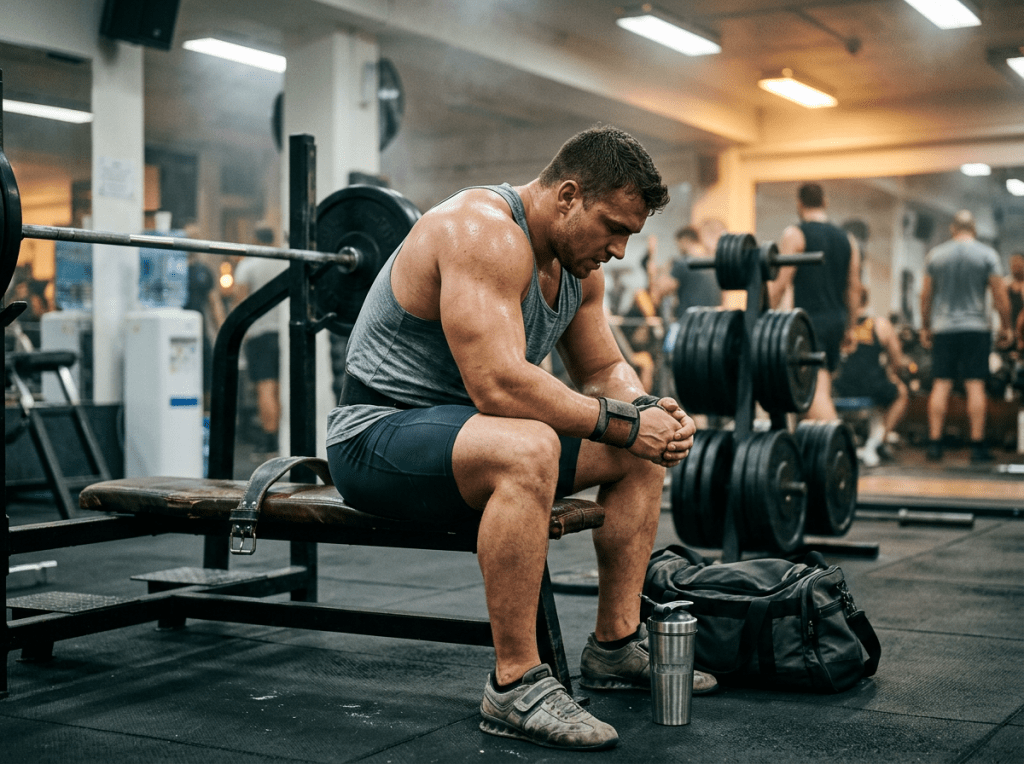


Did you know that proper rest intervals can boost your workout effectiveness by up to 30%? Resting between sets might seem like a small detail. But it’s actually key to achieving your fitness goals. Sports scientists call this “inter-set recovery.” It’s when your muscles get rid of waste and refuel.
Knowing how long to rest is crucial for muscle recovery and performance. Whether you want to build muscle, get stronger, or boost endurance, the right rest time matters. You’ll see why making rest a part of your training plan is important.

Key Takeaways
- Rest intervals can enhance workout effectiveness by up to 30%.
- Inter-set recovery is crucial for muscle recovery and performance.
- Rest duration varies based on specific fitness goals.
- Proper rest can help clear metabolic waste from muscles.
- Deliberate planning of rest time is essential for effective training.
Understanding the Importance of Rest Between Sets
Resting between workouts is just as crucial as lifting weights. Sports scientists call this “inter-set recovery.” It lets your body get rid of waste and refill energy stores. You might overlook these breaks, but they’re key to better performance.
What is Inter-Set Recovery?
Inter-set recovery is when your muscles rest after a set of exercises. Your body does several important things during this time:
- It clears out waste like lactic acid.
- It refills energy stores like ATP for muscle contractions.
- It gets your muscles ready for the next set.
This recovery is vital for keeping strength and performance up. It’s not just downtime; it’s a critical part of your workout.
How Rest Breaks Affect Muscle Fuel Replenishment
Rest breaks are essential for muscle fuel replenishment. The right length of rest depends on your goals. Here’s what to consider:
- Short breaks boost muscular endurance.
- Long breaks are better for strength training.
- Finding the right balance boosts workout effectiveness.
Knowing about these processes shows how important rest is in your training. Proper inter-set recovery improves performance and safety.

How Long to Rest for Beginners
If you’re new to the gym, knowing how long to rest between sets is key. You should focus on learning form, getting used to the gym, and setting a routine. The rest time you take can greatly affect your workout.
Rest Duration for Compound vs. Accessory Movements
Different exercises need different rest times. Here’s a quick guide:
- Compound Exercises: These include squats, deadlifts, and bench presses. Rest for two minutes to 2:30 seconds. This helps your muscles recover for the next set.
- Accessory Movements: These are exercises like bicep curls or tricep extensions. For these, rest for 60 to 90 seconds.
Focus on Form and Routine Establishment During Rest
Rest periods are not just for sitting. Use this time to get ready mentally and physically for your next set. Don’t get distracted by your phone. Instead, focus on your breathing and think about your next move. This helps you keep good form and a consistent routine.
| Exercise Type | Recommended Rest Time |
|---|---|
| Compound Exercises | 2:00 – 2:30 minutes |
| Accessory Movements | 60 – 90 seconds |

By following these tips, you can make the most of your gym time. You’ll see better strength and endurance. Remember, rest is a big part of your training.
How long to rest between sets for max muscle, strength & endurance
Knowing how long to rest between sets is key to reaching your fitness goals. The right rest time varies based on your goals. Different goals need different rest periods. Using rest periods wisely can boost your workout performance.
Here’s a quick overview of how rest length varies by training goal:
- Muscle Hypertrophy: Rest for 30 to 90 seconds to promote muscle growth.
- Strength: Aim for 2 to 5 minutes to maximize strength gains.
- Endurance: Shorter rests of 30 to 60 seconds are effective for improving muscular endurance.
Each goal affects your training in unique ways. For muscle growth, shorter rests keep muscles tense. Longer rests are better for strength. Finding the right balance is crucial.
| Training Goal | Recommended Rest Time | Focus |
|---|---|---|
| Muscle Hypertrophy | 30 – 90 seconds | Muscle Growth |
| Strength | 2 – 5 minutes | Maximal Force |
| Endurance | 30 – 60 seconds | Muscle Stamina |
Adjusting your rest periods can lead to better results as you train. Understanding these differences helps you make smart workout choices.

Optimal Rest Periods for Muscle Hypertrophy
Building muscle size depends a lot on rest intervals. The old rule was to rest for one minute between sets of 8 to 12 reps. This kept muscles tired and stressed. But new studies say resting for 1 to 3 minutes might be better for results.
Classic Advice vs. Recent Research Findings
Many people rest for 30 to 90 seconds, thinking it’s best. This is believed to keep muscles tired and stressed. But research now shows longer rest times can improve results. Resting for three minutes lets you lift heavier and do better in the next sets.
- Resting for 30-90 seconds helps maintain fatigue.
- Three-minute rests can enhance performance.
- Longer rest times may lead to greater strength gains.
Impact of Rest Time on Growth Hormone and Muscle Size
Rest time affects hormone release, like growth hormone. Longer rest lets your body fully recover, leading to bigger muscle gains. Studies suggest longer rest times boost growth hormone, helping muscles grow.
| Rest Time | Effects on Muscle Growth | Recommended Duration |
|---|---|---|
| 30-90 seconds | Maintains fatigue and metabolic stress | Good for endurance |
| 1-3 minutes | Enhances performance and strength gains | Optimal for hypertrophy |

Rest Intervals for Improving Muscular Endurance
Short rest times, about 30 seconds, can greatly improve your muscular endurance. This is key if you’re training for endurance. High reps with little rest are best for this.
Resting for 20 to 60 seconds between sets helps your muscles recover and replenish energy. This is great for circuit training and HIIT. It maximizes endurance gains with short breaks.
Here are the benefits of shorter rest intervals:
- Improved muscle recovery between contractions
- Enhanced cardiovascular efficiency
- Increased ability to sustain prolonged activity
- Better adaptation to endurance training
Adding these short rest periods to your routine can speed up your fitness goals. As you get used to it, your muscles will work better. You’ll be able to do longer workouts with less tiredness.

Maximizing Strength and Power Through Rest Periods
To build strength and power, rest time is key. Resting for 3 to 5 minutes between sets is best. This lets your muscles fully recover, focusing on the energy needed for heavy lifting.
The Science Behind 3 to 5 Minutes Rest for Force Production
Studies confirm that 3 to 5 minutes of rest boosts your ability to lift heavy. This time lets your energy systems recharge. It helps you keep up the intensity in your workout.
The best way to increase strength is to lift heavy, do six reps or less per set, and rest for 3 to 5 minutes. This is the textbook advice.
- Resting 3 to 5 minutes helps recover phosphagen energy stores.
- Allows for maximal force production in subsequent sets.
- Essential for targeting type II muscle fibers, which are key for strength and size gains.
Training Type II Muscle Fibers with Adequate Recovery
Type II muscle fibers are vital for strength training. They grow and get stronger the most. Longer rest times help you train these fibers well.
In summary, to boost your strength and power, focus on rest periods. With 3 to 5 minutes of rest, you’re set for success in your strength training.
The Role of Energy Systems in Determining Rest Length
Knowing how muscles get energy is key to better workouts. Muscles use three main energy systems: the phosphagen, anaerobic (glycolytic), and aerobic (oxidative) systems. Each system is important for different exercises, affecting how long you should rest between sets.
The phosphagen system gives quick energy for intense efforts up to 30 seconds. After, muscles need time to recover and refill energy. Rest for 2 to 5 minutes after using this system.
The anaerobic (glycolytic) system supports efforts from 30 seconds to 3 minutes. It doesn’t need oxygen but gets tired faster. Rest for 30 seconds to 3 minutes to recover from this type of training.
The aerobic (oxidative) system fuels longer, less intense activities. It produces energy for a long time but needs more recovery time. For workouts using this system, rest for more than 3 minutes.
In summary, matching your rest time to the energy system used can improve your performance and recovery. Here are some guidelines:
- Phosphagen system: Rest for 2 to 5 minutes.
- Anaerobic (glycolytic) system: Rest for 30 seconds to 3 minutes.
- Aerobic (oxidative) system: Rest for more than 3 minutes.
How Rest Periods Influence Workout Efficiency and Safety
Rest periods are key in your workout routine. They impact your performance and safety. Finding the right balance is crucial for reaching your fitness goals.
Balancing Rest to Avoid Fatigue or Stiffness
It’s important to balance rest to avoid fatigue or stiffness. Too little rest can lead to poor form and injuries. Too much rest can make you stiff and less effective.
- Shorter rest intervals can boost intensity but may lead to fatigue.
- Longer rest periods help recovery but might reduce workout effectiveness.
- Finding a middle ground ensures better performance and safety.
Maximizing Training Volume and Intensity with Proper Rest
Proper rest is essential for maximizing your workout. It lets you train harder without getting hurt. Timed breaks help your muscles recover and get ready for the next workout.
- Assess your workout type to determine appropriate rest times.
- Monitor your body’s signals to adjust rest as needed.
- Incorporate both short and long rest intervals for varied training.
Understanding rest’s importance can improve your workout. Make rest a key part of your training plan for the best results.
Adjusting Rest Time Based on Personal Fitness Goals
When you work out, how long you rest between sets matters a lot. The right rest time depends on your fitness goals. Adjusting your rest periods can lead to better results.
Here are some common fitness goals and suggested rest durations:
- Muscle Hypertrophy: 30-90 seconds of rest is ideal to promote muscle growth.
- Strength Training: 2-5 minutes of rest allows for full recovery and maximum force production.
- Muscular Endurance: 30-60 seconds of rest helps improve stamina.
- Weight Loss: Shorter rest periods of 15-30 seconds can keep your heart rate up.
It’s key to listen to your body. Try different rest times to see what works for you. Some people need longer breaks, while others do better with shorter ones. Adjusting rest times can make your workouts better.
Tracking your progress is a good idea. This helps you understand how rest periods fit into your workout goals. Use a journal or app to record your workouts and how you feel during rest. This data can help you refine your routine.
| Fitness Goal | Recommended Rest Time |
|---|---|
| Muscle Hypertrophy | 30-90 seconds |
| Strength Training | 2-5 minutes |
| Muscular Endurance | 30-60 seconds |
| Weight Loss | 15-30 seconds |
Conclusion
Rest breaks between sets might seem like an afterthought. Yet, they are crucial for your workout. Understanding their importance helps you reach your fitness goals.
Choosing the right rest time depends on your goals. For muscle growth, strength, or endurance, the right break can make a big difference. It helps your muscles recover and grow.
By focusing on rest, you can improve your workouts. Make rest a key part of your routine. This way, you’ll see better results and perform at your best in every set.
FAQ
What is inter-set recovery?
Inter-set recovery is the time you rest between workout sets. It lets your muscles get rid of waste and refill energy. This step is key to doing better in your next sets.
How long should I rest between sets if I’m a beginner?
Beginners should rest for 2 to 2.5 minutes for big exercises like squats. For smaller exercises, rest for 60 to 90 seconds. This helps you learn proper form and get into a routine.
How does rest time affect muscle hypertrophy?
Resting 30 to 90 seconds between sets was once thought best for muscle growth. But new studies show resting up to three minutes can help more. It lets you lift heavier and do better in your next sets.
What is the recommended rest time for improving muscular endurance?
For better endurance, rest for about 30 seconds or less. This clears waste fast and helps you stay active longer.
How long should I rest to maximize strength and power?
Rest for 3 to 5 minutes between sets to boost strength and power. This lets your muscles fully recover, so you can lift heavier.
Why do rest intervals vary based on fitness goals?
Rest times change based on your fitness goals. Different goals like muscle growth, strength, or endurance need different recovery times. Knowing your goals helps you choose the right rest periods.
How do energy systems influence rest lengths?
The energy systems used during exercise affect rest times. Each system has its own recovery needs. Matching your rest to these systems improves recovery and performance.
What happens if I rest too little or too long?
Resting too little can make you tired too soon, hurting your form and risking injury. Resting too long can make you stiff and lower your workout intensity. Finding the right balance is key to good form and effective training.
How can I adjust my rest periods based on personal fitness goals?
Adjust your rest times based on your goals, experience, and how you feel. Try different rest times to see what works best for you. Whether you’re focusing on muscle growth, strength, endurance, or losing weight, find what suits you.




Leave a Reply