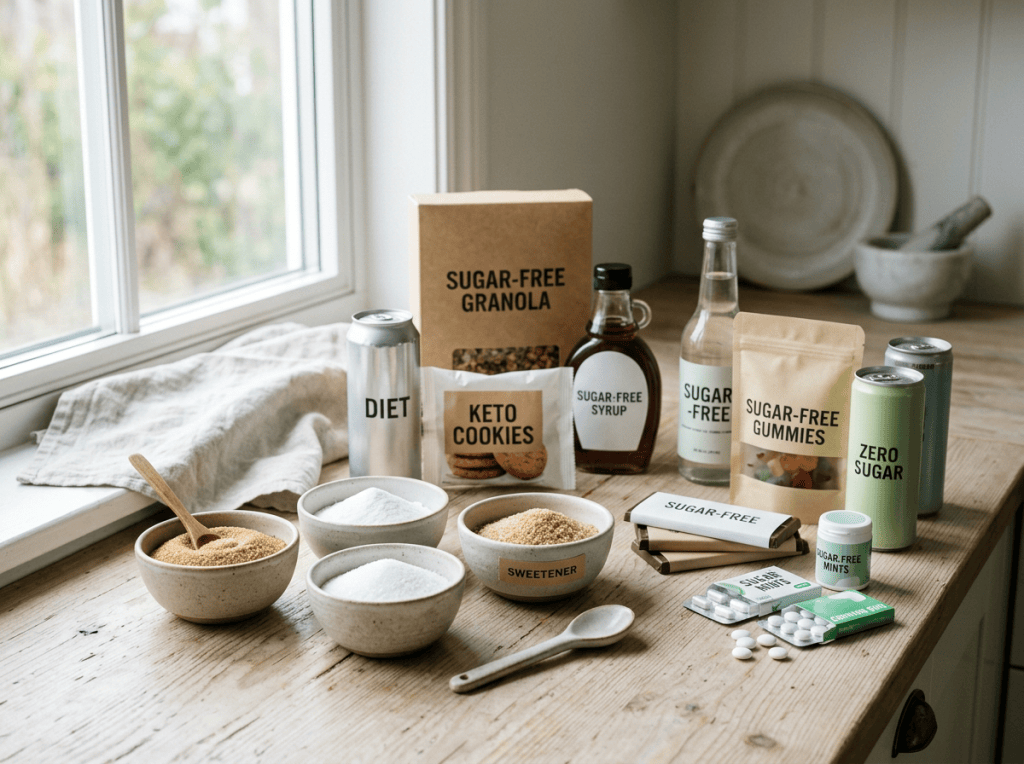


Recent studies show a common sweetener might raise your heart attack and stroke risk. This scary news makes many rethink their choices. When you pick a sugar substitute, you might think it’s a healthy choice. But the truth could be more complex.
The use of these substitutes has grown, mainly for those with obesity or diabetes. You find them in soft drinks, processed foods, and more. Yet, we know little about their long-term effects on heart health.
This article will look at five sweeteners linked to serious health issues. These include xylitol, erythritol, aspartame, acesulfame potassium, and sucralose. Knowing the dangers of these sugar substitutes is vital before choosing a “sugar-free” product.

Key Takeaways
- Many people opt for sweeteners believing they are healthier choices.
- Research indicates some sweeteners may pose cardiovascular risks.
- Common products containing these sweeteners include soft drinks and processed foods.
- Understanding the health implications is essential for informed choices.
- Five specific sweeteners will be discussed in terms of their health risks.
Why artificial sweeteners deserve a second look
The appeal of artificial sweeteners is strong, but their health impacts warrant closer scrutiny. When you choose an artificial sweetener, you might think you’re making a healthy choice. These products are often in items labeled as zero-sugar, low-calorie, low-carbohydrate, and ketogenic (or keto).
But many producers don’t tell you about the health risks. The long-term effects on your heart are not well understood. Studies suggest that using artificial sweeteners might not be as heart-healthy as thought.
When you shop for diet sodas, sugar-free candies, and low-calorie meals, remember “sugar-free” doesn’t mean “risk-free.” Research is growing, raising questions about the safety of these sweeteners. This is true for people with obesity, diabetes, or metabolic syndrome.
“Sugar-free does not automatically mean risk-free.”
In our search for healthier options, it’s key to understand the implications of artificial sweeteners. You should know what you’re eating and how it affects your heart health.

How we picked the 5 artificial sweeteners tied to strokes, blood clots and worse
We chose the 5 artificial sweeteners linked to strokes, blood clots, and worse, based on solid science. Our picks are based on detailed studies of their effects on heart health. These studies looked at over 4,000 people in the U.S. and Europe.
They found a scary link between high levels of erythritol and heart problems. This includes heart attacks and strokes.
Lab tests showed erythritol might make blood clots worse. This is because it affects platelets, which are essential for stopping bleeding.
Our choices are backed by recent studies, like those from the Cleveland Clinic and a 2022 BMJ study. These studies show a clear link between these sweeteners and heart issues.
We know more research is needed, but the current evidence is strong. It’s why we highlight these five sweeteners. They’ve been linked to heart problems, blood clots, and other serious health issues.

Xylitol — the sugar alcohol hiding in “healthy” products
Xylitol is a sugar substitute many don’t know about. It’s found naturally in plants, fruits, and veggies. It’s seen as a healthier sugar option and appears in many everyday products.
Common items that contain xylitol include:
- Sugar-free candies
- Baked goods
- Chewing gum
- Nut butters
- Toothpaste
Despite seeming safe, research shows xylitol might harm heart health. A study by the Cleveland Clinic found that high blood xylitol levels increase heart risks.
What xylitol is and where you find it
Xylitol is a sugar alcohol that tastes sweet but has fewer calories than sugar. It’s popular in “sugar-free” and “healthy” products. But knowing where it’s found is important, as you might be eating it more than you think.
What the research says about xylitol and cardiovascular risk
Studies show high xylitol levels can lead to serious health issues. The Cleveland Clinic study found people with high xylitol levels face higher risks of heart attacks and strokes. Another study by the European Society of Cardiology linked xylitol to higher death rates from heart problems.
With these findings, it’s important to be careful with xylitol. Even if it’s marketed as healthy, knowing its risks helps you make better food choices.

Erythritol — the keto favorite linked to blood clots
Erythritol is becoming more popular, mainly among those on keto or low-carb diets. It’s about 70% as sweet as regular sugar and made from corn. It’s seen as safe for people with diabetes, metabolic syndrome, or obesity. But these groups are already at a higher risk for heart attacks and strokes.
What erythritol is and why it’s marketed as safe
Erythritol is a sugar alcohol found in many low-calorie products. It’s low in calories, making it appealing for those cutting down on sugar. But its safety has raised some concerns.
Even though it’s marketed as safe, the body has trouble breaking it down. It remains in the blood and is then excreted in urine. This can cause blood levels to rise, raising concerns about its long-term effects.
What the research says about erythritol and blood clot formation
Recent studies have found a link between erythritol and heart health. A key study in Nature Medicine looked at over 4,000 people from the U.S. and Europe. It showed that those with more erythritol in their blood were at higher risk for heart attacks and strokes.
Lab studies also found that erythritol makes platelets more active. This is important for blood clotting. So, it could increase the risk of clots, which is bad for heart health.
“Erythritol may promote blood clot formation, raising concerns for those at risk of heart disease.”
In short, while erythritol may seem harmless, new research suggests it might not be as safe. If you’re thinking about using it, consider the risks and benefits carefully.

Aspartame — the classic diet sweetener under new scrutiny
Aspartame is a well-known artificial sweetener. It’s made from aspartic acid and the methyl ester of phenylalanine. These are found in milk, meats, and some veggies. But aspartame is made by manually mixing these two chemicals.
Aspartame is in many products, such as diet sodas and low-calorie foods. It’s known by names like NutraSweet, Equal, and Sugar Twin. But it’s facing health risk concerns.

What the research says about aspartame and cerebrovascular events
Recent studies have raised health concerns about aspartame. A 2022 study in The BMJ found a link to cerebrovascular events. These events can harm blood flow to the brain.
The World Health Organization says aspartame might be cancer-causing. But more research is needed to confirm this.
In short, while aspartame is popular for reducing sugar intake, it’s crucial to stay informed about ongoing research. Talk to a doctor if you’re worried about its health effects.
Acesulfame potassium — the hidden ingredient in sweetener blends
Acesulfame potassium, also known as Ace-K, is a sweetener found in many foods and drinks. It’s much sweeter than sugar and is often mixed with other sweeteners. You’ll see it in products like Sunett and Sweet One.
Knowing about acesulfame potassium helps you choose better foods. It’s in low-calorie items to add sweetness without calories. But it can also mask bad tastes, which is why it’s widely used.
What acesulfame potassium is and where it shows up
- Highly Sweet: Acesulfame potassium is over 200 times sweeter than regular sugar.
- Common Uses: It is frequently found in diet sodas, sugar-free gum, and low-calorie snacks.
- Brand Names: You may encounter it as Sunett or Sweet One in ingredient lists.
Recent studies have raised safety concerns about acesulfame potassium. A 2022 BMJ study found it might increase the risk of heart disease. This is when the heart’s arteries can’t get enough blood, leading to serious health problems.
What the research says about acesulfame potassium and coronary heart disease
Research also shows it might affect heart health and how we feel full or hungry. Some studies suggest it could lead to weight gain, making it less healthy for diets.
The FDA advises against consuming too much acesulfame potassium. They say no more than 15 mg per kilogram of body weight per day. Knowing this can help you pick healthier options.
Sucralose — the chlorine-treated sugar substitute
Sucralose is made from sugar and chlorine. It’s used in many foods, like baked goods and drinks. You’ll often see it as Splenda.
Recent studies have raised safety concerns about sucralose. A 2022 study in the BMJ found a link to coronary heart disease. This is the top cause of death in the U.S., says the National Heart, Lung, and Blood Institute.
This research shows that artificial sweeteners might not be as safe as thought. They might not protect your heart like expected. In fact, they could increase the risk of heart disease.
Remember, “sugar-free” doesn’t mean “heart-healthy.” Knowing about sucralose can guide your food choices. It’s key to making better dietary decisions.
Other sweeteners worth keeping on your radar
There are more sweeteners out there that could affect your health. While we’ve focused on certain sweeteners linked to heart health, it’s good to know about others too.
Saccharin, one of the oldest artificial sweeteners, has faced health concerns. Even though it’s seen as safe by many, some studies hint it might mess with hunger and blood sugar levels.
Stevia, made from Stevia rebaudiana leaves, is marketed as natural. But research on its long-term effects is ongoing. Just because it’s plant-based doesn’t mean it’s completely safe.
Monk fruit and allulose are becoming more popular. Monk fruit is known for being calorie-free. Allulose, a rare sugar, has few calories and is seen as a healthier choice. Yet, there’s not much research on their safety and long-term effects.
When exploring sweeteners, it’s key to stay up to date. Always check labels and look at the latest studies. The world of artificial sweeteners is always shifting, with new research coming out.
How to spot these sweeteners on food labels
To make smart choices, you need to know how to find artificial sweeteners on food labels. These sweeteners have many names, so it’s key to check ingredient lists closely.
Here are some common artificial sweeteners you should look for:
- Xylitol – Often found in sugar-free candies, baked goods, gum, and even toothpaste.
- Erythritol – A popular choice in many keto products.
- Aspartame – Commonly used in diet sodas and low-calorie meals.
- Acesulfame potassium (or Ace-K) – Frequently blended with other sweeteners.
- Sucralose – Known widely as Splenda.
Remember, these sweeteners are in products labeled as “sugar-free,” “low-calorie,” “low-carb,” or “keto.” Always read the full ingredient list, not just the front-of-package claims.
“The best way to avoid artificial sweeteners is to read the labels.”
By knowing these names and where they show up, you can choose better for yourself and your family.
Safer sweetener swaps you can make today
Looking to make healthier choices? Swap artificial sweeteners for natural ones. This simple change can greatly improve your health.
Stevia is a great option. It’s a plant-based sweetener that’s sweet without calories. Remember, even natural sweeteners should be used in moderation.
Monk fruit is another excellent choice. It’s known for its natural sweetness and zero calories. You can use it in many recipes and drinks, making it very versatile.
Small amounts of honey or maple syrup can also work. They add flavor and sweetness but should be used sparingly. The aim is to cut down on sweetness and eat more whole foods.
Research shows that artificial sweeteners might not lower the risk of heart disease. So, switching to natural sweeteners is a step towards a healthier diet. Try these alternatives for a better lifestyle.
“Using artificial sweeteners as a substitute for added sugar isn’t likely to provide any benefit for those hoping to lower their risk of cardiovascular disease.”
When to talk with your doctor about artificial sweeteners
If you’re worried about artificial sweeteners, it’s important to talk to your doctor. This is true if you have diabetes, obesity, or metabolic syndrome. People with heart disease should also think about their sweetener use.
Studies show that artificial sweeteners might not be as safe as we think. They could increase cardiovascular risks. So, a doctor can help figure out your risk and suggest a diet plan that’s right for you.
It’s important to talk to a doctor or dietitian if you use artificial sweeteners frequently. They can give you advice that fits your health needs.
Even though research is ongoing, the current findings are enough to talk to your doctor. This step can help you make better choices for your diet and health.
Conclusion
It’s important to understand the risks of artificial sweeteners to make better diet choices. Five sweeteners—xylitol, erythritol, aspartame, acesulfame potassium, and sucralose—can lead to serious heart problems. This is based on studies in reputable journals.
Checking food labels can help you spot these sweeteners. They’re often in “sugar-free” or “diet” products. Knowing what you eat lets you choose better options.
Talking to your doctor about artificial sweeteners is a good idea, too. They can offer advice based on your health needs.
Remember, your health is more than just avoiding sugar. Knowing the risks of these additives helps you make better choices. This way, you can live a healthier life.

 trim down and shape up
Leave a comment