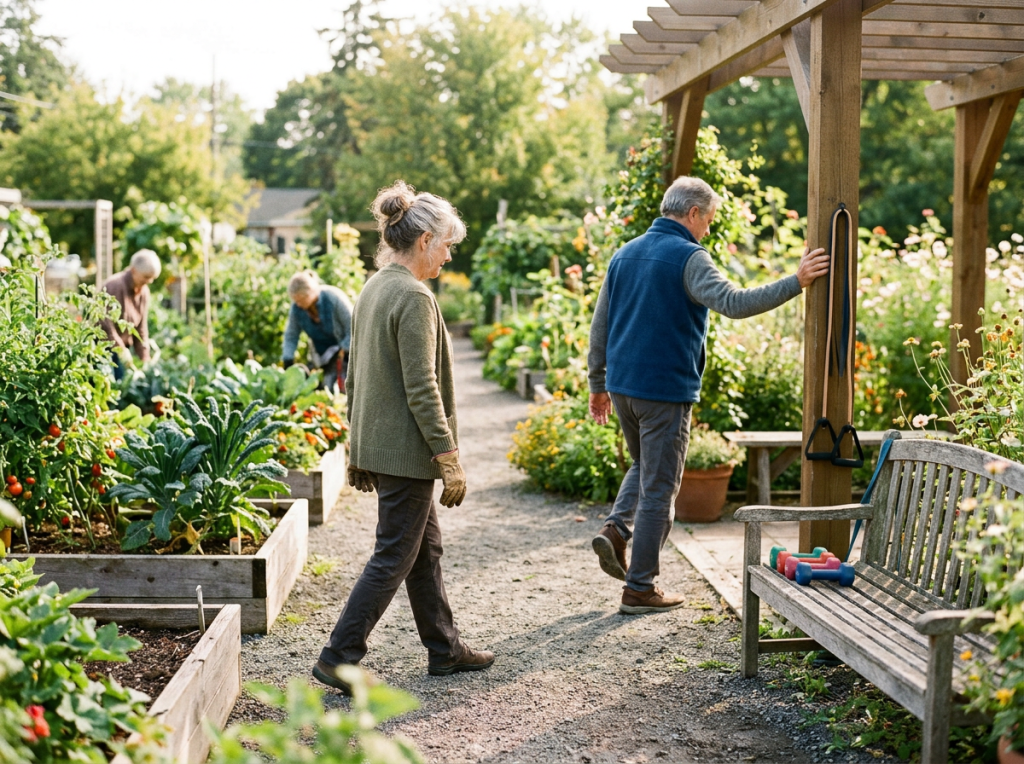


Nearly 80% of older adults experience at least one chronic health condition. This fact shows why adding years is not enough; we must also improve their quality. Energy, movement, and independence help you live better as you age.
Jill Jones, an ISSA-certified personal trainer and co-founder of FitQuo, highlights five areas that shape quality of life with age. These areas are balance and stability, mobility and joint health, resistance training, cardiovascular fitness, and confidence and independence. Better strength can improve balance, while better mobility can make daily activities easier.
You do not need to become an elite athlete to improve your health. Keep strength training accessible, sustainable, and part of everyday life at any age. Regular activity can bring meaningful health improvements.
If you have health conditions, pain, or a history of falls, consult a doctor or qualified fitness professional. Professional guidance can help you build a safer routine and enjoy a more vibrant, fulfilling life as you age.

Key Takeaways
- Quality of life is as important as lifespan.
- Focus on balance, mobility, and strength for better aging.
- Incorporate strength training into your daily routine.
- Consult professionals if you have health concerns.
- Stay active to enhance your energy and independence.
Why aging well is about more than adding years
Aging gracefully means valuing the quality of your years, not just their number. Lifespan refers to the total number of years you live, while healthspan refers to the number of years spent in good health. Adding years without maintaining your abilities may not align with the kind of aging most people want.
Research from the National Institute on Aging shows that regular exercise may extend life and the number of years free from pain or disability. Adults aged 40 and older who take at least 8,000 steps daily face significantly less risk of death. They fare better than adults taking about 4,000 steps.
Moreover, a large lifestyle study found a handful of factors that underpin longevity:
- Maintaining a healthy weight
- Eating a high-quality diet
- Exercising regularly
- Avoiding smoking
- Limiting alcohol consumption
These elements work together to improve your quality of life as you age. Walking, strength training, nutritious eating, enough sleep, regular medical care, and social connections support healthy aging. Genetics and other factors matter, but modest, repeatable behaviors can influence your healthspan.

Not just living longer, but living better—five things that matter most to aging
Aging is not only about the years you live. It is also about the quality of those years. According to Jill Jones, a seasoned expert who works with older adults, five pillars support aging well.
A handful of factors underpin longevity
The first pillar is balance and stability. These skills help you handle daily challenges, including trips and sudden changes in terrain. Improving your balance lowers the risk of falls, a leading cause of injury among older adults.
Next is mobility and joint health. Comfortable movement through a full range of motion is vital. Healthy joints help you enjoy activities such as walking and dancing.
Another key factor is resistance training for bone and muscle strength. This exercise preserves muscle mass and bone density, helping you maintain physical function as you age. You do not need heavy weights; consistency matters most.
Cardiovascular fitness is also important. It helps you sustain activity and recover after exertion. Walking, swimming, and cycling can greatly improve your heart health.
Lastly, there is confidence and independence. These qualities encourage active participation rather than avoiding movement out of fear. Small daily goals can build confidence and support a more fulfilling lifestyle.
How these five pillars work together
These five pillars connect to create a complete approach to healthy aging. Stronger legs can improve your balance, while better joint mobility can make walking easier. As confidence grows, you may exercise more often and strengthen your physical abilities.
Progression is essential during this journey. Start at a manageable level, repeat it often, then slowly increase the activity’s intensity or complexity. If you experience pain, dizziness, or unusual discomfort, consult a healthcare professional.

1. Balance and stability
Balance is a skill, and like any skill, it gets better with practice. As you age, better balance becomes more important. It helps prevent falls and supports your quality of life.
Balance depends on strength, coordination, vision, and flexible joints. Your nervous system makes quick adjustments that help you stay steady. Practice improves body awareness and confidence, making daily tasks safer and easier.
Falls are one of the leading causes of injury in adults over 65
Jill Jones says falls are one of the leading causes of injury in adults over 65, and many are preventable. Simple exercises can train your body to respond better to trips or stumbles. Single-leg work and slow, controlled movements can greatly improve your balance.
Simple ways to train balance every day
You do not need fancy equipment or a gym membership to train your balance. Try these beginner-friendly exercises at home:
- Stand with your feet together and hold the position for 10-30 seconds.
- Shift your weight from side to side, feeling the balance in each leg.
- Practice heel-to-toe walking in a straight line.
- Perform controlled sit-to-stands from a chair.
- March in place while maintaining a steady posture.
- Try brief supported single-leg stands (standing on one foot), using a countertop or sturdy chair for support.
As these movements become easier, slowly progress to more challenging exercises. Use a slow tempo and controlled changes in direction to improve coordination without high impact.
Beyond exercise, address other factors that help prevent falls. Use good lighting, clear walkways, and supportive footwear at home.
Regular vision checks and medication reviews with a healthcare professional may also help. Exercise can reduce fall risk, but it cannot eliminate it completely. If you have a history of falls, severe dizziness, or neurological conditions, seek individualized supervision.
Better balance can build confidence during daily activities. It can help you use stairs, walk outdoors, and shower safely while maintaining your independence.

2. Mobility and joint health
Maintaining mobility and joint health supports a vibrant life as you age. Many people think pain and tightness are inevitable, but they are not. Our bodies adapt to our level of movement, so learn how to keep your joints healthy and working well.
Regular movement supports joint health, and joints need to move to feel good. When we stop moving through our full range of motion, the body starts closing those ranges off permanently. This can cause discomfort and reduced mobility, so learn the difference between ordinary stiffness and symptoms needing medical evaluation.
Pain and tightness are not inevitable
Joint stiffness does not have to come with aging. Long sitting, repetitive movements, past injuries, and fear of pain can reduce mobility. Frequent, gentle motion, such as walking, yoga, or simple stretches, can help keep joints flexible.
Joints need to move to feel good
To maintain mobility, add movement snacks to your day. These simple actions can include:
- Standing during phone calls
- Walking after meals
- Taking the stairs when possible
- Changing positions regularly
Gentle movements, such as ankle circles, shoulder rolls, and hip hinges, can help. The goal is not to force each joint into an extreme range of motion. Maintain the movement needed for daily tasks, exercise, recreation, and independence.
How a sedentary lifestyle is the real enemy, not your age
A sedentary lifestyle is the real enemy, not your age. The National Institute on Aging recommends physical activity for everyone, regardless of age.
Physical activity can benefit overall health, even if weight loss does not occur. Mild muscular effort or a gentle stretch may be normal. Sharp pain, swelling, or joint locking should prompt medical evaluation.
Strengthening your muscles can also support joint comfort. Stronger muscles help movement, but exercises should match your individual needs. By maintaining mobility, you can improve your quality of life and enjoy your golden years with greater ease.

3. Resistance training for bone and muscle strength
As you age, muscle strength helps you manage daily activities. Remember: after 30, we naturally start losing muscle mass. This loss may increase after 60, but manageable resistance training can reverse it.
One fact matters: what most people don’t realize is that resistance training doesn’t just slow that loss; it can actually reverse it. This training also helps maintain bone density, which can help prevent fractures.
The National Institute on Aging links physical activity with muscle function at every age. For some older adults, muscle mass may predict longevity better than weight or BMI.
Muscle strength supports daily tasks such as rising from a chair, climbing stairs, carrying groceries, and maintaining posture. It also protects balance and helps you respond to unexpected demands.
For resistance training, you don’t need heavy weights; you just need to show up consistently. You can challenge your muscles using bodyweight, resistance bands, or household items.
Consider these effective exercises:
- Chair squats
- Wall pushups
- Resistance-band rows
- Step-ups
- Hip hinges
- Calf raises
- Light dumbbell presses
When starting, progress gradually. Increase repetitions, improve control, add a little resistance, or try harder variations. Prioritize technique, breathing, and a stable setup over heavy lifting.
If you have osteoporosis, joint issues, or other health concerns, seek professional guidance.
Consistency is key. Two or three short sessions each week can beat an ambitious routine abandoned after a few days. Track functional gains, such as easier stair climbing or bag carrying, instead of body size or scale weight.

4. Cardiovascular fitness
Cardiovascular fitness supports a healthy heart and lungs. It means your heart, lungs, blood vessels, and muscles can support activity over time. Running, cycling, and swimming work well, but they are not the only options.
Accessible, consistent movements can also improve your heart health. These activities can provide meaningful benefits when practiced regularly.
Jill Jones says you do not need to run a 5K to improve your VO2 max. VO2 max measures how efficiently your body uses oxygen. For beginners and older adults, raising your heart rate in a controlled, rhythmic way can help. Simply marching, stepping, or brisk walking can make meaningful progress.
Traditional cardio isn’t the only way to improve your heart health
Many people think intense workouts are the only way to boost cardiovascular fitness. Remember: traditional cardio isn’t the only way to improve your heart health. Moderate activities can fit your lifestyle and still bring great results.
Brisk walking, low-impact dance, and marching in place can build endurance. These movements help you improve gradually without overwhelming your body.
The goal is effort, not speed
Understanding your effort level helps you choose the right pace. An easy pace lets you hold a comfortable conversation.
A moderate pace allows talking but makes it harder. A vigorous pace allows only short phrases.
Start with five to ten minutes of activity. Gradually increase your exercise duration as your fitness improves, because the goal is effort, not speed.
Beginner-friendly ways to raise your heart rate
These beginner-friendly options can improve your cardiovascular fitness:
- Brisk walking
- Low-impact dance
- Step-touches
- Marching in place
- Stationary cycling
- Water exercise
- Gentle intervals alternating easier and harder efforts
Speed is not the main goal. Focus on a safe challenge that you can repeat.
Always listen to your body. Stop exercising and seek medical care for chest pain, fainting, severe shortness of breath, or unusual heart palpitations. Cardiovascular fitness also gives you energy for errands, travel, social activities, and hobbies.

5. Confidence and independence
As you age, confidence and independence remain closely connected. This trait shapes how you interact with the world around you. When you trust your body and abilities, you may choose activities that improve your quality of life.
Research from the National Institute on Aging links physical activity, social engagement, and mental health. These factors support a better quality of life in your later years. Confidence lets you walk farther, try new classes, and join social activities without fear.
Why confidence shapes how you age
Confidence affects your behavior directly. When you trust your physical abilities, you are more likely to accept challenges. Fear of falling, pain, or embarrassment may lead to avoidance, reduced strength, and reduced independence.
Confidence is built through habit and progression
Building confidence means setting and reaching small, functional goals. Confidence is built through habit and progression. Here are some examples:
- Stand from a chair five times without assistance.
- Walk to a nearby destination.
- Complete a short strength training session.
- Perform household tasks with better control.
These manageable successes can build confidence over time. Keep track of your wins, even when they do not show on a scale. Better posture, steadier steps, and improved sleep all show progress.
Small daily wins that protect your independence
Independence does not mean doing everything alone. Seeking help from trainers, physical therapists, or family members is wise. Assistive devices can also help you stay active and involved.
Everyday habits that support your independence include:
- Carrying light items safely.
- Practicing stair techniques.
- Standing during parts of the day.
- Maintaining balance near a counter.
- Organizing your home to reduce trip hazards.
Confidence also connects with mental health and social connections. If you have ongoing anxiety, depression, or loneliness, discuss these feelings with a qualified professional.
Common myths about aging and fitness
Many people believe age prevents them from starting strength training. This myth can stop older adults from gaining the many benefits of resistance exercise. Strength training should be accessible, sustainable, and part of everyday life at any age.
Starting strength training depends on your current ability, health status, and personal goals—not just your age. Begin with simple movements, such as supported sit-to-stands or wall pushups. Light resistance bands and body-weight exercises also work well, so choose movements that feel right for you.
Another myth says soreness proves that a workout worked. Good training should feel challenging but controlled, with enough time for recovery. You do not need soreness to know you are making progress.
Some people think walking alone meets all fitness needs. Walking supports cardiovascular health, but many people also need strength, balance, and mobility exercises. Your goal is not to compete with younger people, but to maintain or improve everyday abilities.
If you have osteoporosis, have recently had surgery, or have severe pain, seek medical or professional advice before starting a new exercise program. Remember, small, consistent sessions can build a strong foundation for sustainable fitness at any age.
Putting it all together — your weekly blueprint
A balanced weekly routine can support all five pillars of healthy aging. A flexible plan can improve your balance and stability and support mobility and joint health. It can also build bone and muscle strength through resistance training, improve cardiovascular fitness, and foster confidence and independence.
Begin with a simple structure: complete two to three short resistance training sessions each week. Take daily mobility breaks, and practice balance exercises several times weekly near stable support. On most days, do cardiovascular activities such as walking, marching, cycling, or dancing.
You can break sessions into smaller blocks; three 10-minute walks throughout the day can work as well as one longer session. On recovery days, do gentle mobility work instead of stopping completely. This lets your body rest while you stay active.
Pair these habits with routines you already follow. Practice balance while waiting for your coffee, walk after lunch, or do strength exercises after your favorite television program. Consistency matters, so build habits gradually.
Track your progress and prepare equipment in advance; check progress every few weeks. Ask if activities feel easier or if you can slightly increase time, repetitions, or resistance. Lastly, nutrition, sleep, and social connections also support your five movement-focused pillars.
Embrace Your Journey to Healthy Aging
Aging is not only about counting years. It is about living fully. A handful of factors underpin longevity, and they can improve your quality of life.
Balance is a skill, and like any skill, it gets better with practice. Start small with daily exercises that improve your stability.
Your joints need to move to feel good. Regular physical activity can keep them healthy and flexible. Remember, the goal is effort, not speed.
You do not need to push yourself to extremes. Simple activities, like walking or stretching, can make a difference.
Building confidence is essential. Confidence is built through habit and progression. Celebrate small victories during your fitness journey.
Each step you take supports your independence and well-being.
As you add these five pillars to your life, choose one realistic action for this week. Options include a daily walk, practicing sit-to-stands, or scheduling short strength sessions. Every bit counts.
Always consult a doctor or qualified professional when health concerns arise.
Focus on preserving your healthspan. It is not just about living longer; it is about moving, connecting, and taking part in life. Your journey to healthy aging starts today.


Leave a comment