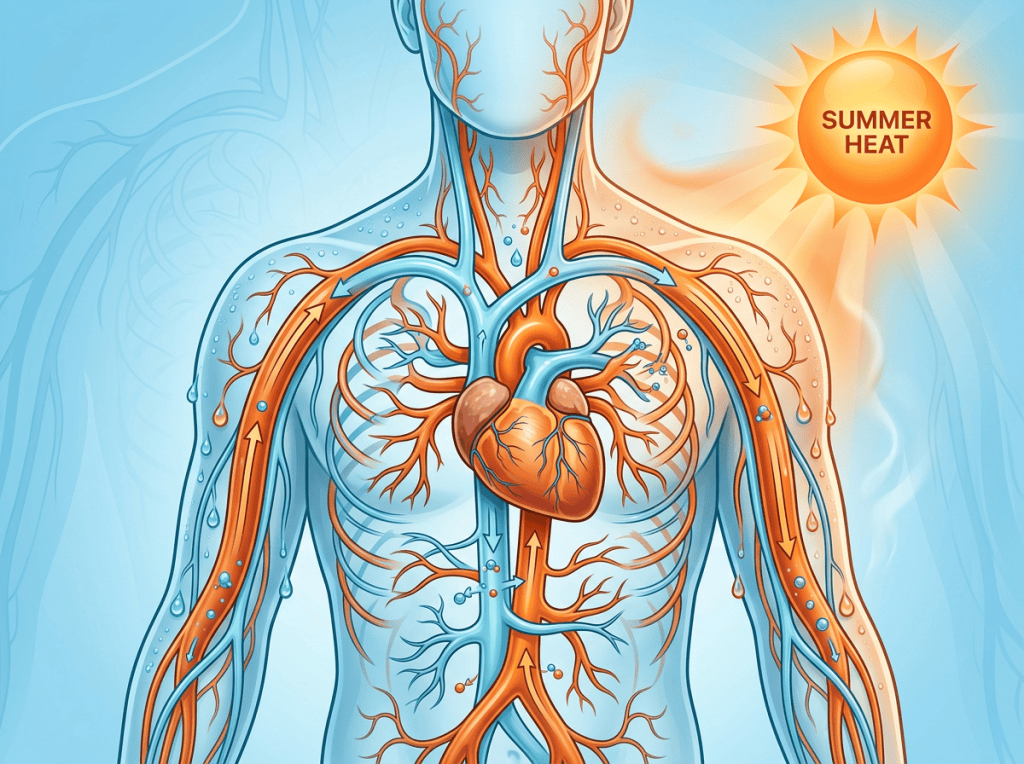


Have you ever thought about how summer heat affects your heart? Many people ignore how the weather impacts their health. They focus more on what they eat and how much they exercise. But the weather can really affect your heart health.
Dr. Nieca Goldberg, a cardiologist at NYU Langone Health, says heat can lower your blood pressure. This drop can be risky, mainly for people with health issues. It’s important to know how heat and heart health are connected. This knowledge helps you make better choices.
As you read more, you’ll learn how heat changes your blood pressure. You’ll find out about vasodilation and dehydration. You’ll also get tips on staying safe while enjoying the outdoors.

Key Takeaways
- Heat exposure can lower blood pressure, posing risks for certain individuals.
- Environmental factors are as important as diet and exercise for heart health.
- Understanding how heat affects your body can help you make safer choices.
- Stay informed about hydration and its role in maintaining blood pressure.
- Recognize individual risk factors to protect your cardiovascular health.
Beyond diet and exercise: Other factors that shape cardiovascular health
There’s more to heart health than just diet and exercise. While these are important, other factors play a big role too. Managing stress, getting enough sleep, and staying connected with others are all important for your heart.
The role of stress management in heart health
Stress can harm your heart without you even realizing it. It raises your heart rate and blood pressure. Chronic stress can lead to serious heart problems. So, it’s vital to find ways to manage stress, like meditation or deep breathing.
Why sleep quality matters for your cardiovascular system
Good sleep is essential for heart health. Bad sleep can raise blood pressure and cause inflammation, both of which are risk factors for heart disease. Try to get 7-9 hours of sleep a night to keep your heart healthy. Remember, sleep is not a luxury; it’s a necessity for your heart.
The heart benefits of social connections
Don’t overlook the power of social connections. Being with friends and family can lower stress and offer emotional support. This is key for heart health. Studies show people with strong social ties have better heart health.
“Good relationships keep us happier and healthier. Period.”

The overlooked link between weather and heart health
Surprisingly, the weather can greatly affect your heart health, more so in summer. Most people don’t realize how weather impacts heart health. But there’s a real connection we should know about. Temperature changes make your heart and blood system work differently, often in ways we don’t notice.
Dr. Nieca Goldberg, MD, from NYU Langone Health, says summer heat is key. When it gets hot, your body changes in ways that can affect your blood pressure and heart.
How temperature changes affect your cardiovascular system
When it gets warmer, your blood vessels open up to cool you down. This can lower your blood pressure, which might sound good. But it also makes your heart work harder to keep blood flowing well. Here are some ways temperature changes affect your heart:
- Increased heart rate: Your heart beats faster to keep your body cool.
- Fluid balance: Heat can cause dehydration, affecting your blood volume.
- Vascular response: Blood vessels widen, which can lower your blood pressure.
Why summer heat deserves special attention
In summer, the dangers of heat increase. High temperatures and humidity make it harder for your heart to work. Here’s why you should be careful:
- Increased risk of heat-related illnesses: Heat exhaustion can harm your heart.
- Dehydration: Losing fluids can cause a dangerous drop in blood pressure.
- Cardiovascular strain: Your heart has to work harder to cool you, which is risky for those with heart issues.

Here’s exactly what happens to your blood pressure when you sit outside all day
Sitting outside in the summer heat can lower your blood pressure. It’s important to know how this happens for your heart health.
The physiological mechanism behind heat-induced blood pressure changes
When it’s too hot, your blood vessels dilate to cool you down. This is called vasodilation. As your blood vessels dilate, your blood pressure decreases.
Vasodilation and heat dissipation
In hot weather, cooling down is key. Vasodilation helps by increasing blood flow to your skin. This lets heat escape and keeps your body temperature stable.
The role of sweating in temperature regulation
Sweating is also important for cooling down. It helps your body lose heat through evaporation. But too much sweating can lead to dehydration.
How dehydration amplifies the blood pressure drop
When you sweat, you lose water and electrolytes. These are important for maintaining blood volume. Dehydration reduces blood volume, which can cause blood pressure to drop further. This is risky, mainly if you stay outside for a long time.
What a cardiologist wants you to know
Dr. Nieca Goldberg, MD, says:
“When your body gets too warm, your blood vessels widen to help release heat. This can cause blood pressure to decrease, if you become dehydrated from sweating.”
It’s important to remember that lower blood pressure isn’t always good. Heat can cause it to drop quickly and without warning, which can be harmful to your health.

Why heat-induced blood pressure drops can be dangerous
A drop in blood pressure due to heat can be risky. It’s important to know the difference between a safe drop and a dangerous one. This knowledge is key to staying healthy.
The difference between healthy and dangerous blood pressure drops
Healthy blood pressure drops happen slowly. They come from changes in diet and exercise. But a sudden drop from extreme heat is a big worry.
Dr. Nieca Goldberg says that while lowering blood pressure is good, heat-induced drops are not. These drops can cause serious symptoms, even for those with heart problems.
Symptoms to watch for during prolonged heat exposure
It’s important to know the signs your body is struggling in the heat. Look out for:
- Lightheadedness or dizziness when standing up quickly
- Excessive fatigue
- Palpitations or irregular heartbeats
- Chest discomfort
- Shortness of breath
- Fainting or feeling faint
These can be signs of other conditions. However, these signs can mean your heart is working hard. Ignoring them can lead to serious problems, worse for those with heart disease.
If you notice any of these symptoms, it’s vital to consult your doctor for further evaluation.
Being aware and taking action in hot weather is extremely important. Spotting these symptoms early can keep you safe.

Factors that determine how your blood pressure responds to heat
It’s important to know how your blood pressure changes with heat. The amount of change varies for everyone. Things like body weight, fitness, age, and health conditions play a big role.
How body weight influences your heat tolerance
Your body weight affects how you handle heat. People with more weight find it harder to cool down. This is because fat acts as insulation, making cooling harder.
Also, those with a higher metabolic rate produce more heat. This can cause discomfort and strain on the heart.
The role of fitness level in cardiovascular resilience
Fitness level is key in handling heat. Regular exercise boosts heart health. But even fit people can face heat-related stress.
This stress can cause dizziness, mainly when standing up after being outside for a long time.
Age and pre-existing conditions are risk factors
Age is a big risk factor for heat tolerance. Older adults often have trouble cooling down. They might not notice the signs of heat-related illness early.
People with heart disease, low blood pressure, obesity, diabetes, or kidney disease need to be careful in the heat. Some medicines, like diuretics, can worsen dehydration.

Other ways summer heat strains your cardiovascular system
When it gets hot, your heart works harder. This is because your body needs to cool down. This extra work can harm your heart in many ways.
How your heart works harder to cool your body
In hot weather, your heart beats faster. This is your body’s way of cooling itself. You might feel tired more easily because of this.
Dr. Nieca Goldberg says that your heart works harder in the heat. This can make you feel more tired and stressed.
The impact of fluid loss on blood volume
Sweating means you lose water and important salts. This can make your blood thinner. Your heart then has to work harder to keep blood flowing.
This is tough for people with heart problems. They might feel chest pain or get short of breath.
Reduced circulation efficiency in extreme heat
Extreme heat can really strain your heart. It can make it harder for blood to flow. This is bad news for people with heart disease.
They might feel chest pain or get dizzy. It’s important to listen to your body and seek help if you notice these signs.

It’s important to know how heat affects your heart in the summer. By understanding this, you can take steps to keep your heart healthy.
The deadly connection between heat and cardiovascular disease
Knowing how heat affects your heart is key to avoiding heart disease. Studies show that extreme temperatures can cause serious health issues, mainly for those with existing conditions. A 2024 study in Circulation Research found a strong link between heat and more deaths from heart disease. It showed that every degree of temperature rise increases heart disease deaths by 2.1%.
This means even small temperature increases during heat waves can lead to more heart attacks, strokes, and other heart problems. Dr. Nieca Goldberg warns that people with heart disease, low blood pressure, obesity, diabetes, or kidney disease should be extra careful in the heat. These conditions can worsen the dangers of high temperatures.
Older adults are also at higher risk. They might not adjust to heat as well or notice signs of heat-related illness early. Also, some medications, like diuretics and certain blood pressure meds, can make dehydration worse or make it harder for the body to handle heat.

Practical tips for staying safe in the summer heat
As temperatures rise, it’s key to stay safe and healthy. Drinking plenty of water and managing your time outside can help. Here are some tips to stay safe this summer.
Hydration strategies that protect your blood pressure
Drinking enough water is vital for blood pressure, more so in hot weather. Here are some tips for staying hydrated:
How much water you really need
Knowing how much water you need is important. Aim for:
- At least 8-10 cups of water daily.
- More if you are active or exposed to high temperatures.
- Check your urine color; light yellow means you’re hydrated.
Electrolyte considerations
Your body loses electrolytes through sweat. To replace them, try:
- Drinking sports drinks or eating foods rich in electrolytes.
- Eating bananas, avocados, and leafy greens.
- Watching your sodium intake to keep electrolytes balanced.
Smart ways to limit your time in extreme heat
It’s important to limit your time in extreme heat. Here are some smart ways to do it:
- Stay in the shade or indoors during peak sun hours (10 a.m. to 4 p.m.).
- Wear light, light-colored clothes to reflect sunlight.
- Take breaks in air-conditioned spaces when you can.
Timing your outdoor activities for safety
Planning your outdoor time can help you avoid heat problems. Here are some tips:
- Do outdoor exercise in early morning or late evening.
- Avoid hard activities during the hottest times of the day.
- Listen to your body; rest if you feel tired.
Dr. Nieca Goldberg stresses the need for prevention and preparedness. If you have heart disease or another chronic condition, talk to your doctor. They can help you stay safe in the summer heat and may suggest changes to your routine or medications.

Warning signs: When heat-related blood pressure changes need medical attention
Knowing when heat impacts your blood pressure is key. It’s vital to spot the signs of heat-related hypotension, more so in hot weather. When your body can’t handle extreme heat, it can cause serious health problems.
Recognizing the symptoms of heat-related hypotension
Common signs of heat-related hypotension include:
- Dizziness
- Lightheadedness
- Excessive fatigue
- Palpitations
- Chest discomfort
- Shortness of breath
- Fainting
These symptoms mean your blood pressure has dropped too low. Your brain and other vital organs might not get enough blood. If you see these signs, act fast.
When dizziness and lightheadedness signal an emergency
If you feel dizzy or lightheaded, stop and find a cool spot. Drink water if you can, loosen tight clothes, and rest. Dr. Nieca Goldberg says if symptoms don’t get better fast, or if you have chest pain, shortness of breath, confusion, or lose consciousness, go to the ER right away.
Don’t ignore these symptoms, and this is even more true if you have heart disease. Acting quickly can greatly improve your health and safety.
Conclusion
Your heart health is a delicate balance. High blood pressure is bad, but so is low blood pressure. It’s important to understand this, more so in summer when heat is a risk.
Stay hydrated to protect yourself. Drink lots of water, even more if you’re outside for a long time. Try to avoid being in extreme heat. Schedule your outdoor time for when it’s cooler.
Wear light clothes to help your body stay cool. Taking breaks in the shade or air conditioning helps a lot. If you have heart disease, talk to your doctor for advice.
Being proactive about your health lets you enjoy summer safely. With the right steps, you can stay healthy and have fun in the sun.





Leave a Reply